 How-to
How Do You Choose Pet-Friendly Flooring for Dogs?
Last Updated: October 25, 2026
Quick Summary
The best pet-friendly flooring for dogs is luxury vinyl plank, which resists scratches, handles accidents, and cleans up with a damp mop. Porcelain tile is the runner-up for durability, and carpet stays in play for comfort in low-traffic rooms. Profile your dog's size, age, and accident pattern before you shop.
- Residential LVP typically runs 6 to 12 mil, and 12 mil and up is often recommended for homes with large or active dogs.
- Most scratches come from the launch, the turn, and the dig, not from ordinary walking.
- Wipe standing water within 15 to 30 minutes and clean urine within minutes using an enzymatic cleaner.
- Glue-down LVP or porcelain tile with sealed or epoxy grout suits dogs with frequent accidents.
- A matte or textured surface gives paws grip and hides scratches better than a glossy finish.
Table of Contents
- Start With Your Dog, Not the Showroom Sample
- What Is the Best Flooring for Dogs?
- Scratch-Resistant Flooring for Dogs: What Actually Holds Up
- Waterproof Flooring for Pets: Where Moisture Decides the Winner
- Easy-to-Clean Flooring for Pets: Matching Cleanup to Your Routine
- Traction, Comfort, and Noise: The Factors Samples Never Show You
- Get a Free In-Home Estimate Before You Commit
- Frequently Asked Questions
Start With Your Dog, Not the Showroom Sample
Choosing pet-friendly flooring for dogs starts with your dog, not the display rack. Most buyers walk into a showroom and fall for a beautiful sample that fails within a year. The fix is simple: profile your dog first, then shop.
Here is what to write down before you look at a single plank.
Size, Age, and Activity Level
Big dogs wear floors faster. A 90-pound dog running the same hallway as a 12-pound terrier puts far more force into every turn. Claws and body weight combine into a scuffing machine.
Age matters just as much. Senior dogs need grip underfoot so they do not slip on turns. Puppies need forgiveness, because accidents are part of the deal.
Answer three questions:
- How heavy is your dog, fully grown?
- How many hard turns does your dog make indoors each day?
- Is anyone in the home unsteady on their feet?
Accidents, Water Bowls, and Muddy Paws
Now map the mess. Where does the water bowl sit? How often do muddy paws cross the kitchen?
These spots decide which flooring survives. A water bowl that overflows daily will find every seam in a glued plank floor.
Watch out: skipping this step is a common mistake. Buyers pick a floor for the living room and forget the utility corner where the real damage happens.
What Is the Best Flooring for Dogs?
The best flooring for dogs is luxury vinyl plank. It resists scratches, handles accidents, and cleans up with a damp mop.
Here is how the main options stack up:
| Flooring | Scratch Resistance | Water Resistance | Best For |
|---|---|---|---|
| Luxury vinyl plank | High | High | Whole-home use with dogs |
| Porcelain tile | Very high | Very high | Kitchens, mudrooms, entries |
| Laminate | Medium | Low | Low-moisture rooms |
| Engineered hardwood | Low to medium | Low | Adult dogs, calm households |
| Carpet | Low | None | Bedrooms, stairs, comfort zones |
Luxury vinyl comes in plank and tile forms, often called LVP and LVT. Both share a wear layer that takes claws well.
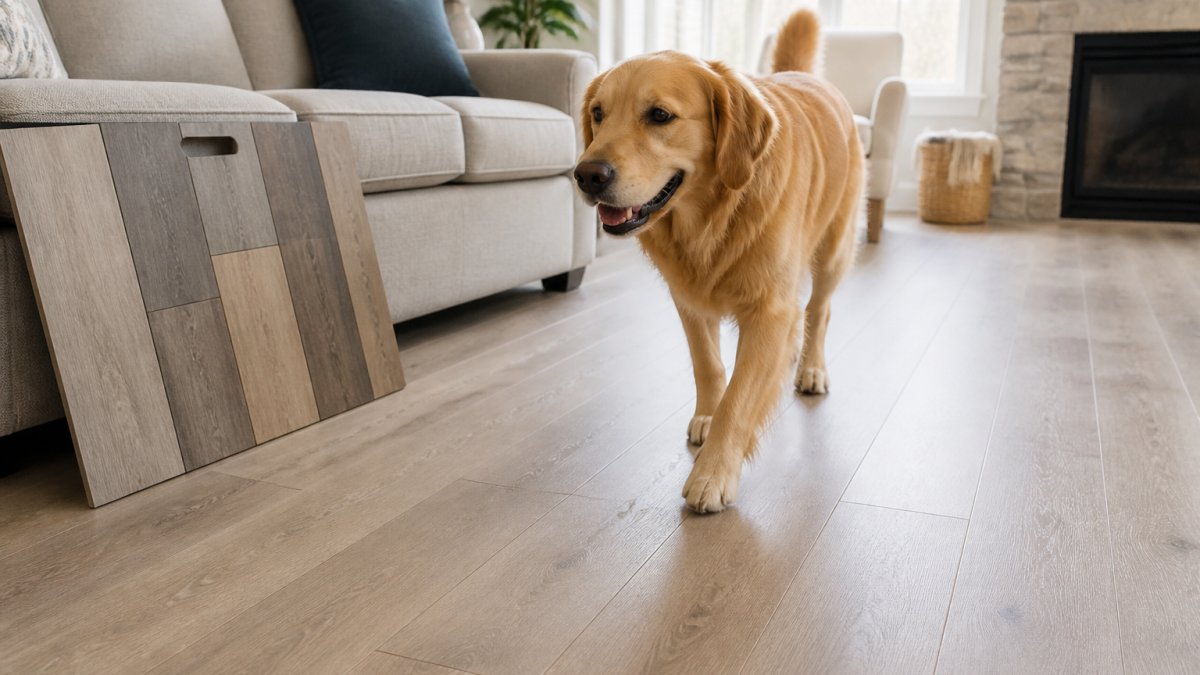
Scratch-Resistant Flooring for Dogs: What Actually Holds Up
Scratch-resistant flooring for dogs comes down to three things: the wear layer, the surface texture, and the hardness of the core. Get those right and claw marks stay cosmetic. Get them wrong and a 60-pound dog can scar a floor in a season.
The Wear Layer Is the Whole Game on Vinyl
On luxury vinyl plank and tile, the wear layer is a clear urethane-based coating measured in mils (thousandths of an inch). Residential LVP typically runs 6 to 12 mil; 12 mil and up is often recommended for homes with large or active dogs.
Thickness is not the only variable. A matte or low-gloss finish scatters light and hides micro-scratches that a glossy surface would reveal under window light.
Where Scratches Actually Come From
Most guides blame walking. Walking barely scratches a floor. The damage comes from three motions:
- The launch. A dog sprinting from a standstill at the back door digs in with every claw. This is the single biggest source of scratches on hard flooring.
- The turn. Hard turns on slick surfaces cause claws to skid, and skidding claws cut.
- The dig. Dogs that scratch at doors, crates, or food bowls apply concentrated point pressure that no finish fully resists.
That is why the highest-traffic scratch zones are entries, kitchen perimeters, and the path to the door, not the middle of the living room.
How the Materials Compare on Claw Damage
- Porcelain tile. Glazed porcelain shrugs off claws entirely; the scratch risk is on the grout, not the tile. Unglazed or polished porcelain can show fine scratches, so choose a matte or textured glaze.
- Luxury vinyl plank and tile. Holds up well when the wear layer is 12 mil or thicker. Thin, builder-grade vinyl (6 mil) shows claw marks within a year in an active home.
- Laminate. The melamine wear layer resists scratches reasonably well, but the core swells if moisture reaches it, so scratch resistance is not the limiting factor, water is.
The Test You Can Run in the Store
Bring a key or a coin and drag it across a sample with moderate pressure. A wear layer that scuffs visibly under a key will not survive a dog's launch.
If you are leaning toward vinyl, it helps to understand the factors that influence pricing before you commit, as a thick wear layer can impact the overall cost. For a full breakdown, see the cost of luxury vinyl plank flooring installation.
Waterproof Flooring for Pets: Where Moisture Decides the Winner
Waterproof flooring for pets means the core does not swell when liquid sits on it. Luxury vinyl and porcelain tile are genuinely waterproof. Laminate and hardwood are not, and a single overnight accident can warp them. But "waterproof" is a claim about the plank, not the floor, and that distinction is where most pet-floor failures happen.
Not All Accidents Are the Same
Different messes stress a floor in different ways, and the cleanup window changes with each:
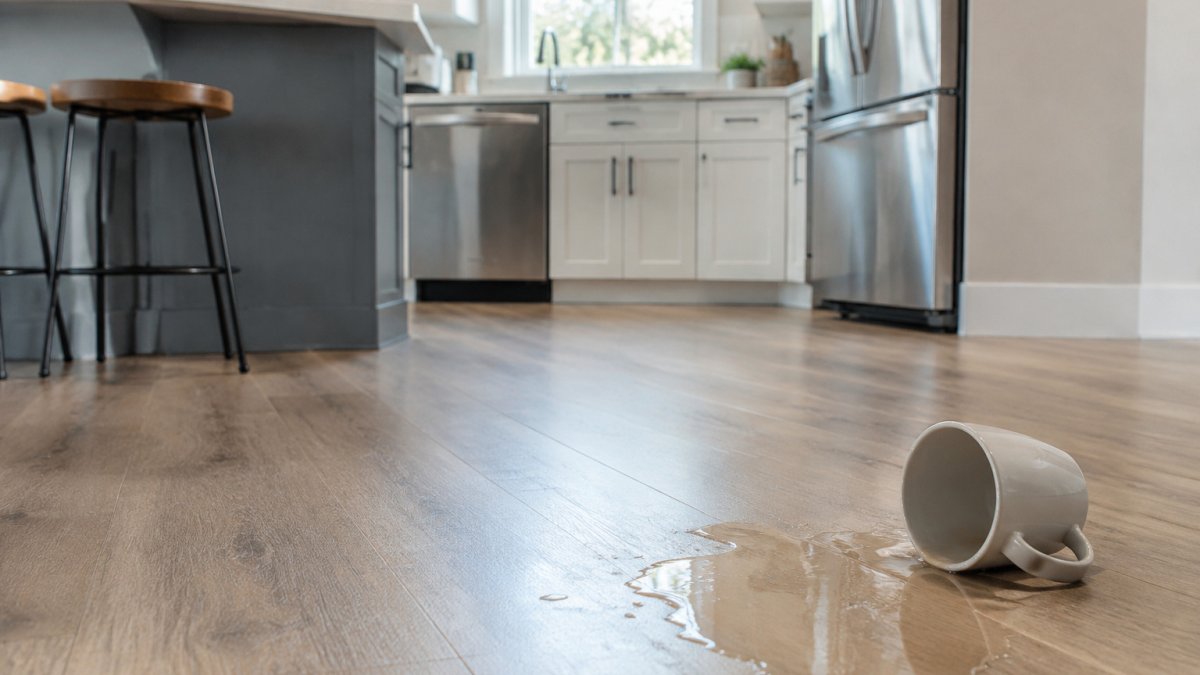
- Standing water (tipped bowl, overflow). Spreads fast and finds every seam. On a glued or floating plank floor, water that reaches the seam can wick under the planks. Wipe within 15 to 30 minutes.
- Urine. The real threat is not the liquid volume but the chemistry. Urine is acidic and, if left, ammonia and bacteria can dull finishes and leave odor in seams and grout. Clean within minutes, not hours, and use an enzymatic cleaner rather than an ammonia-based one.
- Vomit. Acidic and abrasive. Scoop, then clean with a pH-neutral cleaner; repeated exposure can etch natural stone and dull some tile glazes.
Why a Waterproof Floor Still Fails
A waterproof plank on a failed installation is not a waterproof floor. The failure points are predictable:
- Seams. Floating LVP clicks together but is not a sealed system. Standing water at a seam can reach the subfloor. Glue-down installations with tight seams perform better in wet zones.
- Perimeter expansion gaps. Required for floating floors, but they are also a path for water to reach the subfloor and the wall cavity. Silicone the gap at wet zones.
- Transitions and thresholds. The strip between rooms is a common leak point. A waterproof floor in the kitchen does not protect the laminate in the hallway if water runs through the transition.
The Humid-Home Factor
Moisture moves through the air, not just from spills. In a humid climate, floors that handle humidity well stay flat and tight at the seams; floors that do not will cup, gap, or buckle even without a single accident. Acclimate any flooring to the home for the manufacturer's specified period before installation and keep indoor humidity within recommended ranges with a dehumidifier or HVAC system.
For a deeper look at how humidity affects flooring choices here, read our guide to flooring for humid coastal homes.
Matching the Floor to the Accident Pattern
If your dog has frequent accidents, prioritize glue-down LVP or porcelain tile with sealed or epoxy grout, and seal the perimeter and transitions. If accidents are rare and isolated, a floating LVP with a tight click system and a mat at the water bowl is usually enough. The floor you choose matters less than whether the installation closes the paths water takes to the subfloor.
Easy-to-Clean Flooring for Pets: Matching Cleanup to Your Routine
Easy-to-clean flooring for pets should match how you actually clean, not how you wish you did.
Match the surface to your habits:
- Daily sweeper: LVP and tile reward a quick pass with a vacuum or sweeper.
- Weekly mopper: Tile and vinyl handle a damp mop without fuss.
- Rare cleaner: Skip carpet and textured stone, which trap hair and grit.
Smooth surfaces win on cleanup. Carpet holds odor from accidents and needs deep cleaning to recover. Grout lines in tile collect dirt and need a brush.
The real test is hair. Short dog hair weaves into carpet fibers. On vinyl and tile, it sits on top where a vacuum catches it.
Traction, Comfort, and Noise: The Factors Samples Never Show You
Traction, comfort, and noise decide whether you love the floor after six months. A showroom sample tells you none of this.
Slick floors cause slips. Senior dogs and big dogs on hard turns need grip, and a matte texture delivers it.
Comfort cuts both ways. Hard surfaces are tough on joints for older dogs.
Noise is the sleeper issue. Claws click on hard floors, and that sound carries through a quiet house.
If comfort and quiet matter most, our guide to durable carpet options for high traffic areas covers the practical side.
Get a Free In-Home Estimate Before You Commit
Samples lie under showroom lights. A floor that looks warm and rich in the store can read cold and gray in your living room at 4 p.m.
An in-home visit shows how each option looks in your actual light. We see the real traffic paths, the water bowl corner, and the stairs your dog flies down.
Before you hire anyone, it helps to understand the different options available for flooring services. Read our comparison of a flooring contractor vs big box store to see how they differ.
Ready to see your options in your own home? Get a Free Estimate. Floor Coverings International of Myrtle Beach offers premium flooring solutions including hardwood, carpet, tile, and luxury vinyl, serving Myrtle Beach & Surfside Beach, SC.
Frequently Asked Questions
Is luxury vinyl flooring a good choice for dogs?
Luxury vinyl plank and tile are among the strongest all-around picks for dog households. The wear layer resists scratches from claws, the core is water-resistant or waterproof depending on the product, and cleanup after accidents is simple. Viva Floors' 2026 guide ranks waterproof LVP first for most pet owners for exactly these reasons. Check the wear layer thickness and the manufacturer's pet warranty before you buy, since cheap vinyl can dent under heavy furniture and large dogs.
Will dog pee ruin laminate flooring?
It can. Standard laminate has a fiberboard core that swells when moisture reaches the seams, and repeated urine exposure can warp planks permanently. Waterproof laminate built with a sealed core handles occasional accidents better, but standing liquid left overnight is still a risk. If your dog has frequent accidents or you are house-training a puppy, waterproof flooring for pets such as luxury vinyl or porcelain tile removes that failure point entirely.
What is the best scratch-resistant flooring for dogs?
Porcelain tile is the most scratch-resistant option because the glaze is harder than most dog claws and the color runs through the body of the tile. Luxury vinyl with a thick wear layer is second and much warmer underfoot. Engineered hardwood with an aluminum oxide finish resists light scratching but will show marks from large, active dogs over time. Whatever you pick, keep nails trimmed and use felt pads under furniture to reduce wear.
What can I clean my floors with if I have a dog?
For routine cleaning, sweep or vacuum first to lift hair and grit, then mop with a pH-neutral cleaner made for your floor type. Avoid steam mops on vinyl and laminate, since heat and moisture can loosen seams. For accidents, blot up liquid immediately, then clean with an enzymatic pet cleaner that breaks down urine rather than masking it. Easy-to-clean flooring for pets should also have a low-texture surface, because deep grout lines and heavy embossing trap dirt.
Your dog will keep being a dog, and your floor should be built for that. Floor Coverings International of Myrtle Beach brings premium flooring and carpet options to your door, with in-home consultations that show samples in your own light. We help you weigh durability, moisture resistance, and comfort against how you actually live. Get started with Floor Coverings International of Myrtle Beach and choose a floor that holds up to every muddy paw.