 How-to
How to Choose Moisture Resistant Flooring That Lasts
Last Updated: November 5, 2026
Quick Summary
To choose moisture resistant flooring, first decode the label: waterproof means the core won't swell, water-resistant tolerates spills briefly, and moisture-resistant only handles normal humidity and dampness. Then match the product to the room, since tile and vinyl outperform laminate, and always test the subfloor for moisture before installation.
- Waterproof describes the material, not the installation, so water still gets through unsealed seams and edges.
- Porcelain tile is generally regarded as among the most water-resistant flooring types, though grout is its weak point.
- LVP is waterproof through its entire core, while swollen laminate planks never recover.
- The plastic sheet method tapes a roughly 2-foot square of polyethylene to a slab and leaves it 24 hours.
- Most warranties exclude flooding, appliance leaks, and standing water left unattended, even on waterproof products.
Table of Contents
- Start With Water Resistance Labels: Waterproof, Water-Resistant, or Moisture-Resistant
- The Most Water-Resistant Flooring Types and How They Perform
- LVP vs. Waterproof Laminate: Which Handles Spills Better
- Choosing Moisture-Resistant Flooring for Kitchens
- Choosing Moisture-Resistant Flooring for Bathrooms
- Test and Prep the Subfloor Before Installation
- Weigh Total Installed Cost, Comfort, and Maintenance
- Get a Free In-Home Estimate for Your Moisture-Resistant Flooring
- Frequently Asked Questions
Start With Water Resistance Labels: Waterproof, Water-Resistant, or Moisture-Resistant
Learning how to choose moisture resistant flooring starts with decoding three labels sellers use almost interchangeably. They are not the same, and the gap decides whether your floor survives a spilled bucket or a slow leak.
Waterproof flooring means the core of the plank or tile will not swell, warp, or break down when water sits on it.
Water-resistant flooring tolerates spills and damp conditions for a limited time. Wipe it up reasonably fast and it performs well.
Moisture-resistant flooring is the loosest term of the three.
Here is the distinction most buyers miss: waterproof describes the material, not the installation.
What Each Label Actually Promises
| Label | What It Means | Handles Spills? | Handles Standing Water? |
|---|---|---|---|
| Waterproof | Core will not swell or break down | Yes | Short-term, if seams are sealed |
| Water-resistant | Tolerates dampness for a limited window | Yes, if wiped up | No |
| Moisture-resistant | Handles normal humidity and damp conditions | Usually | No |
Read the manufacturer's warranty before you trust any label. Warranties spell out what water exposure is covered and what voids the claim, and most exclude flooding, appliance leaks, and standing water left unattended.
For a deeper look at how these labels play out in coastal homes, our guide to moisture resistant flooring for beach homes walks through the environment-specific trade-offs.
The Most Water-Resistant Flooring Types and How They Perform
Two flooring families handle moisture better than everything else on the market: tile and vinyl. Each wins in different rooms, and picking between them comes down to how the space gets wet.
Porcelain and Ceramic Tile
Porcelain tile is generally regarded as among the most water-resistant flooring types. Its dense body absorbs very little water, and a glazed surface resists spills. Ceramic is also water-resistant, though its more porous body relies on the glaze for protection.
Tile's weak point is grout. Cement-based grout is porous and stains if left wet. Sealing grout helps, and epoxy grout closes the gap further.
- Best for: bathrooms, laundry rooms, entryways
- Watch out: cracked or missing grout lets water reach the subfloor
Luxury Vinyl Plank and Luxury Vinyl Tile
Luxury vinyl plank (LVP) is a synthetic floor with a waterproof core, a printed design layer, and a clear wear layer on top.
The wear layer is what you are really buying. A thicker wear layer resists scratches from pets and holds up in high-traffic areas.
- Best for: kitchens, basements, whole-home installs
- Watch out: water can seep under planks at the edges if the perimeter is not sealed
If you are comparing brands before you commit, our breakdown of the best luxury vinyl plank brands covers what separates a durable plank from a thin one.
LVP vs. Waterproof Laminate: Which Handles Spills Better
LVP wins the spill test, and it is not close. Luxury vinyl is waterproof through its entire core.
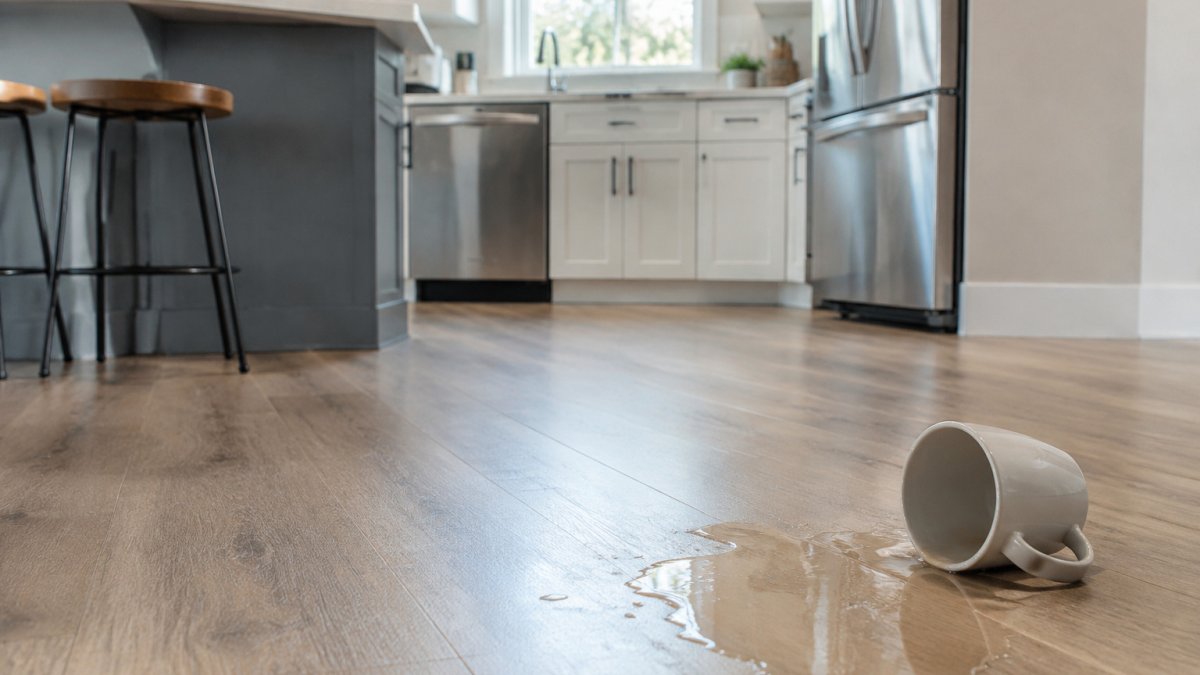
Laminate's weakness is its edges. Water that reaches a seam can wick into the core, and once a laminate plank swells, it does not recover.
That said, waterproof laminate costs less in many cases and looks more like real hardwood. If your priority is appearance and your rooms stay dry, it is a reasonable choice.
A simple rule: laminate for dry bedrooms and living rooms, LVP anywhere a spill is likely. For homes dealing with seasonal damp, our steps to prevent flooring buckling in humidity explain why edge sealing matters so much.
Choosing Moisture-Resistant Flooring for Kitchens
Kitchens produce the most frequent water exposure in any home: dishwater, ice maker lines, dropped glasses, and stove steam.
Luxury vinyl plank is often a practical choice for kitchens because it is comfortable to stand on during meal prep and easy to clean.
Three kitchen-specific checks before you buy:
- Slip resistance: wet tile gets slick. Ask for a textured or matte finish.
- Seams: fewer seams mean fewer places for water to enter. Large-format tile or wide planks help.
- Under the appliances: pull the fridge and check for leaks before installation. A slow drip destroys any floor over time.
Watch out: an unsealed expansion gap at the toe kick or island base is where most kitchen floor failures start.
Choosing Moisture-Resistant Flooring for Bathrooms
Bathrooms combine standing water, high humidity, and frequent cleaning, making them the hardest room in the house. Tile is the standard answer, and porcelain is the strongest option.
For a warmer floor, LVT works well in bathrooms as long as the planks are glued or locked tight and the perimeter is sealed. Skip traditional laminate entirely. One overflowed toilet or a failed wax ring will end it.
The details that decide bathroom performance:
- Grout choice: epoxy grout resists water and stains far better than cement grout.
- Sealing: seal the floor-to-wall joint with caulk, not grout, so it flexes.
- Ventilation: run the exhaust fan during and after showers. Surface moisture is the enemy between cleanings.
Test and Prep the Subfloor Before Installation
Every moisture-resistant floor fails for the same reason: the subfloor underneath was wet, uneven, or both. Subfloor moisture is a common cause of installation problems, and many manufacturers' warranties exclude claims tied to a subfloor that was out of spec before installation. Test before you install, not after.
Testing a Concrete Slab
Concrete slabs wick moisture from the ground and from curing. A slab can look and feel bone dry and still release enough vapor to swell a plank edge or loosen adhesive within a season.
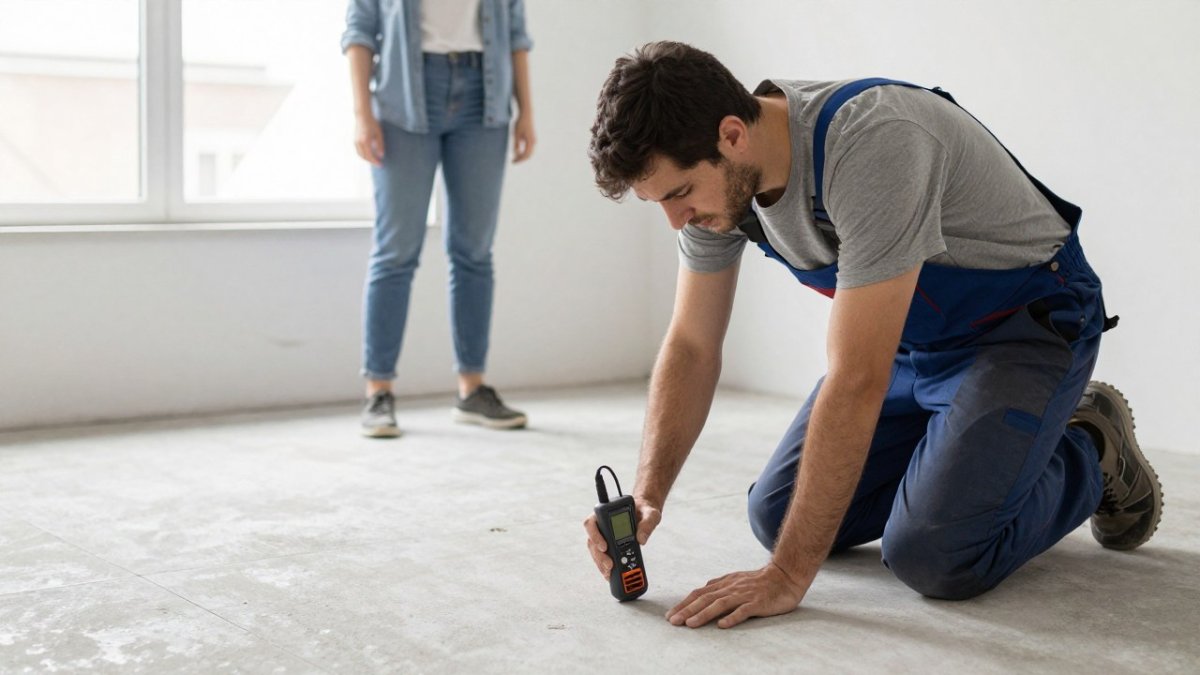
The plastic sheet method is the field test most installers start with: tape a roughly 2-foot square of clear polyethylene to the slab, seal all four edges, and leave it 24 hours. Condensation on the underside or a darkened patch underneath means vapor is moving through the slab. A calcium chloride test gives a quantified reading in pounds of moisture vapor per 1,000 square feet over 24 hours, and an in-situ relative humidity probe reads the slab's internal humidity directly. Manufacturers publish a maximum allowable number for each method, and it varies by product and adhesive, so the only figure that matters is the one in your product's installation instructions.
Testing a Wood Subfloor
Wood subfloors need a pin-type moisture meter read at several points across the room, not one spot near the door. Compare readings against the manufacturer's limit, usually a percentage of moisture content often tied to the flooring being installed. Readings are often taken at the perimeter, near plumbing walls, and in the center of the room, because those zones can read differently.
What to Do When a Test Fails
A failed test is not a reason to pick a different floor. It is a reason to fix the source first:
- Concrete: apply a moisture-mitigating coating or a vapor-retarding membrane rated for the slab, or specify an underlayment the manufacturer approves over high-moisture slabs.
- Wood: find and fix the leak, grade issue, or blocked crawlspace vent feeding the moisture before any flooring goes down.
- Both: confirm the HVAC is running and the space is conditioned to the manufacturer's acclimation range before installation.
Prep Work That Protects the Install
- Fix leaks and grade issues outside before touching the floor
- Patch cracks and level low spots with a floor patch compound
- Install a vapor barrier or moisture-blocking underlayment where the manufacturer requires it
Watch out: skipping the moisture test because the slab looks dry is the single most common shortcut, and it is also the one most likely to void the warranty when a plank edge cups six months later.
Weigh Total Installed Cost, Comfort, and Maintenance
The sticker price is only part of what you pay. Total installed cost can include material, labor, underlayment, trim, old floor removal, and subfloor prep. Installed cost depends on labor, setting materials, underlayment, and subfloor prep, so the total varies by project. Pricing depends on quantity, dates, and delivery; visit our website for current prices or a quote.
Compare on Lifecycle Value, Not Material Price
A useful way to compare is cost per year of service, not cost per square foot at the register:
- Material and installation: the upfront number most buyers compare
- Underlayment and prep: often the line item that decides whether the floor lasts
- Repair: individual LVP planks can be swapped if you kept spares from the same dye lot; cracked tile means replacing the tile and matching grout, and discontinued tile can mean replacing the field
A common pattern is for the cheaper material to cost more per year once repair and replacement are counted, especially in a bathroom or laundry room where water exposure is routine.
Read the Warranty Before You Buy
The warranty is the real specification, and the exclusions matter more than the headline term. Before you commit, check the language for:
- Flooding and standing water: most warranties exclude damage from appliance leaks, overflowed toilets, and water left standing, even on waterproof products
- Humidity and acclimation: many require the home to be kept within a specified humidity and temperature range, and a claim can be denied if the HVAC was off during installation
- Installation errors: gaps, unsealed perimeters, and missing underlayment are common denial reasons
Ask the seller for the full warranty document, not the box summary, and read the exclusions section first.
Match the Floor to the Room
A simple decision path works better than a single recommendation:
- Is the room routinely wet? Bathrooms, laundry rooms, and entryways point to porcelain tile or glued LVT with sealed perimeters.
- Is the room occasionally wet? Kitchens and basements point to LVP with a moisture-blocking underlayment.
- Is the room dry but humid? Bedrooms and living rooms in a damp climate still need a vapor barrier under the floor and a product rated for the humidity range.
- Is the subfloor concrete on grade? Test first, then choose a product the manufacturer approves over that slab condition.
- Is there a history of leaks? Fix the source before choosing any floor, because no product is warrantied against an active leak.
Then weigh the ongoing costs:
- Comfort: LVP is warmer and softer. Tile is hard and cold.
- Maintenance: tile needs grout cleaning and resealing. LVP needs sweeping and damp mopping.
- Repairs: keep spare planks or tiles from the same lot so a future repair matches.
For a full cost breakdown, our guide to the cost of luxury vinyl plank flooring installation covers what goes into the total.
Get a Free In-Home Estimate for Your Moisture-Resistant Flooring
Choosing the right floor for a damp climate is best done in the room itself, under your own lighting, with your own subfloor in view. At Floor Coverings International of Myrtle Beach, we offer in-home flooring design consultations and installation.
We offer many premium flooring and carpet options, and our team can help with flooring selection and installation. Get started with Floor Coverings International of Myrtle Beach and request a free in-home estimate for a floor built to handle the moisture your home actually sees.
Frequently Asked Questions
What is the difference between water-resistant and waterproof flooring?
Water-resistant flooring resists surface moisture and handles spills if you wipe them up promptly, but water can still reach the core through seams and edges over time. Waterproof flooring means the core itself will not swell or break down when exposed to water, which is why luxury vinyl plank, luxury vinyl tile, and porcelain tile are common picks for wet areas. Read the warranty carefully, because most waterproof claims still exclude damage from standing water or flooding.
Which is better, LVP or waterproof laminate?
Luxury vinyl plank is fully waterproof through its core and holds up well in kitchens, bathrooms, and basements where humidity swings. Waterproof laminate has a treated core that resists moisture, but its seams and edges are more vulnerable if water sits. For moisture-prone rooms, LVP is the safer choice. Laminate can work in drier living areas where you want a realistic wood look at a lower cost.
What type of flooring is most water resistant?
Porcelain tile is generally considered highly water resistant because it is fired at high heat, has very low water absorption, and can be installed with sealed grout. Luxury vinyl plank and luxury vinyl tile come next, since their cores are impermeable and their wear layers protect against spills. No flooring survives prolonged flooding without attention to the subfloor.
How long can moisture-resistant flooring tolerate a spill or standing water?
Surface spills on waterproof vinyl or tile can sit for hours without damage if you clean them up the same day. Standing water is different: it should be removed promptly, and warranties typically exclude damage from pooling water, appliance leaks, or flooding. In a humid coastal climate, also keep indoor humidity in check, since trapped moisture under any floor can damage the subfloor even when the surface looks fine.
The floor you choose today will face spills, humidity, and everything a busy household throws at it. Get the label, the subfloor, and the installation right, and it will hold up for years. Get them wrong, and no warranty will save you.