 How-to
Prevent Flooring Buckling in Humidity: 7 Steps
Table of Contents
- What Flooring Buckling Is and How It Differs From Cupping and Warping
- Common Causes of Flooring Buckling: Excess Moisture and Humidity
- Ideal Indoor Humidity for Hardwood Floors and Why It Matters
- Step-by-Step: How to Monitor and Control Humidity in Your Home
- How to Prevent Laminate Flooring From Buckling in High-Moisture Areas
- Best Flooring for High Humidity: Material Choices That Resist Moisture Damage
- How to Fix Buckled Hardwood Floors and When to Call a Professional
- Prevention Checklist: Protect Your Flooring Before and After Installation
- Frequently Asked Questions
Last Updated: October 19, 2026
What Flooring Buckling Is and How It Differs From Cupping and Warping
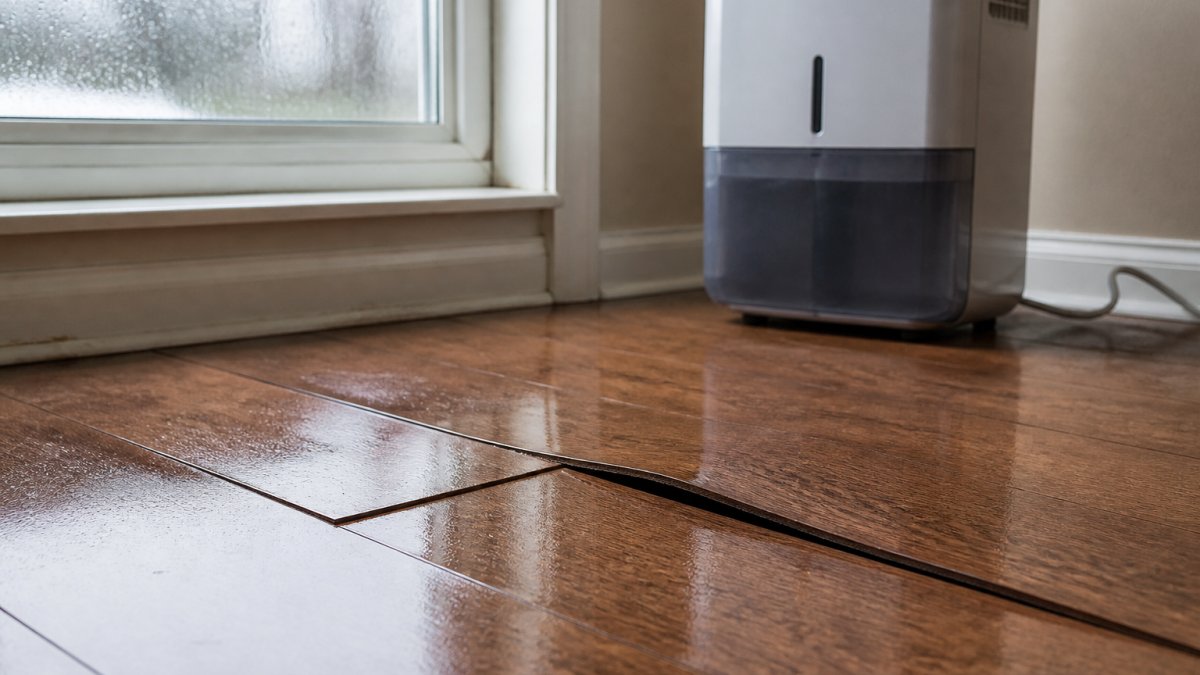
Flooring buckling is when hardwood or laminate floorboards lift up and curve away from the subfloor, creating visible waves or peaks, and understanding how to prevent flooring buckling is essential for coastal homeowners.
Cupping and warping can sometimes be reversed if caught early and dried out, but buckling is usually permanent, once wood lifts that severely, replacement is often the only fix.
Buckling typically appears suddenly, often after a water event or during humid seasons. You'll see visible gaps between planks and the subfloor. The floor may feel spongy underfoot. In severe cases, you can slide a card under the board.
Common Causes of Flooring Buckling: Excess Moisture and Humidity
Buckling happens when moisture gets into wood flooring faster than it can escape. The wood absorbs water, swells, and has nowhere to expand except up. Several sources create this problem:
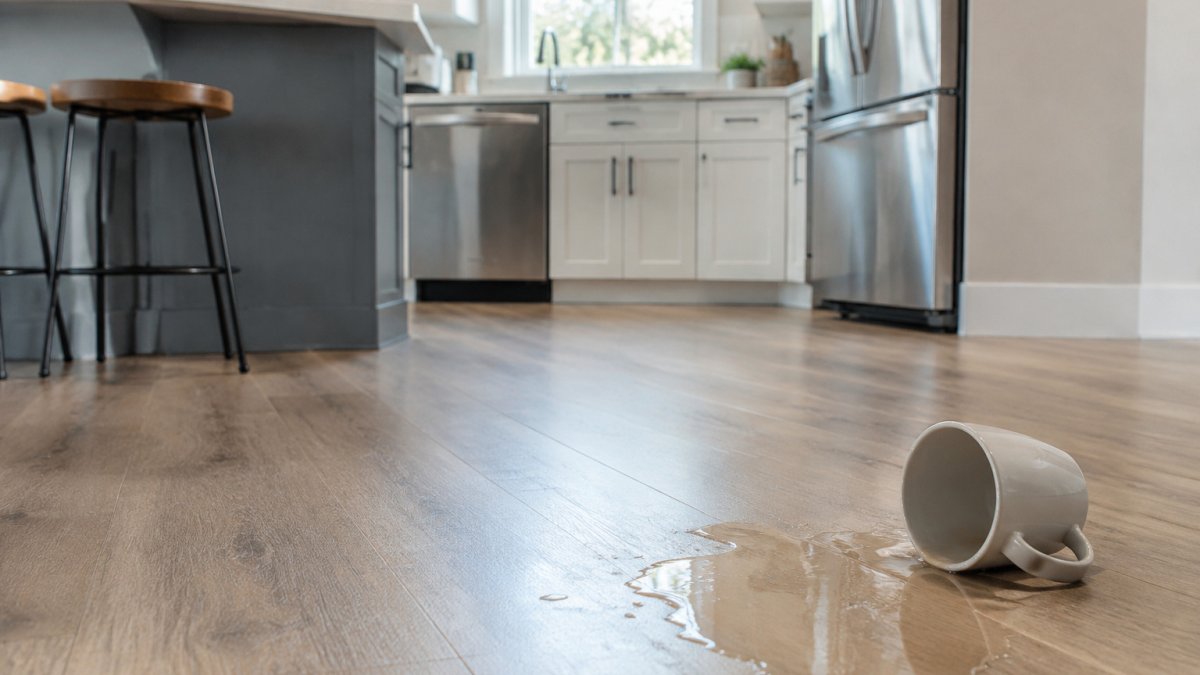
Standing water and spills are the most obvious culprits. A burst pipe, flooding, or a pet accident left too long introduces water directly into the wood. If water sits for more than 24-48 hours, damage is almost certain.
High indoor humidity is the silent killer, especially in coastal areas. When relative humidity stays above 60% for extended periods, wood continuously absorbs moisture from the air.
Leaks and moisture sources below the floor are harder to spot. A leaking foundation, poor drainage around your home, or moisture seeping through the subfloor creates a constant source of dampness.
Seasonal changes amplify the problem. Summer humidity with poor ventilation or AC that isn't running creates the perfect storm; winter can be just as bad if a humidifier isn't balanced properly.
Improper installation sets the stage for failure.
Ideal Indoor Humidity for Hardwood Floors and Why It Matters
The sweet spot for hardwood flooring is 30-50% relative humidity, with 35-55% acceptable for most conditions.
Below 30% humidity, wood shrinks, creating gaps and cracks. Above 55%, it swells. Push past 60% for weeks, and you're asking for trouble.
For laminate flooring, the tolerance is even tighter, many manufacturers recommend 30-50% to prevent swelling and buckling.
In beach communities, your interior can easily climb to 60-70% without active management. Monitoring and control aren't optional, they're essential.
Step-by-Step: How to Monitor and Control Humidity in Your Home
Step 1: Measure Indoor Relative Humidity
You can't control what you don't measure. Buy an inexpensive digital hygrometer (around $15-30) and place it in your main living area, away from direct sunlight or heat vents. Check it daily for a week to establish your baseline.
Record the readings. If your average is above 50%, you need to take action. If it's consistently above 60%, buckling risk is high.
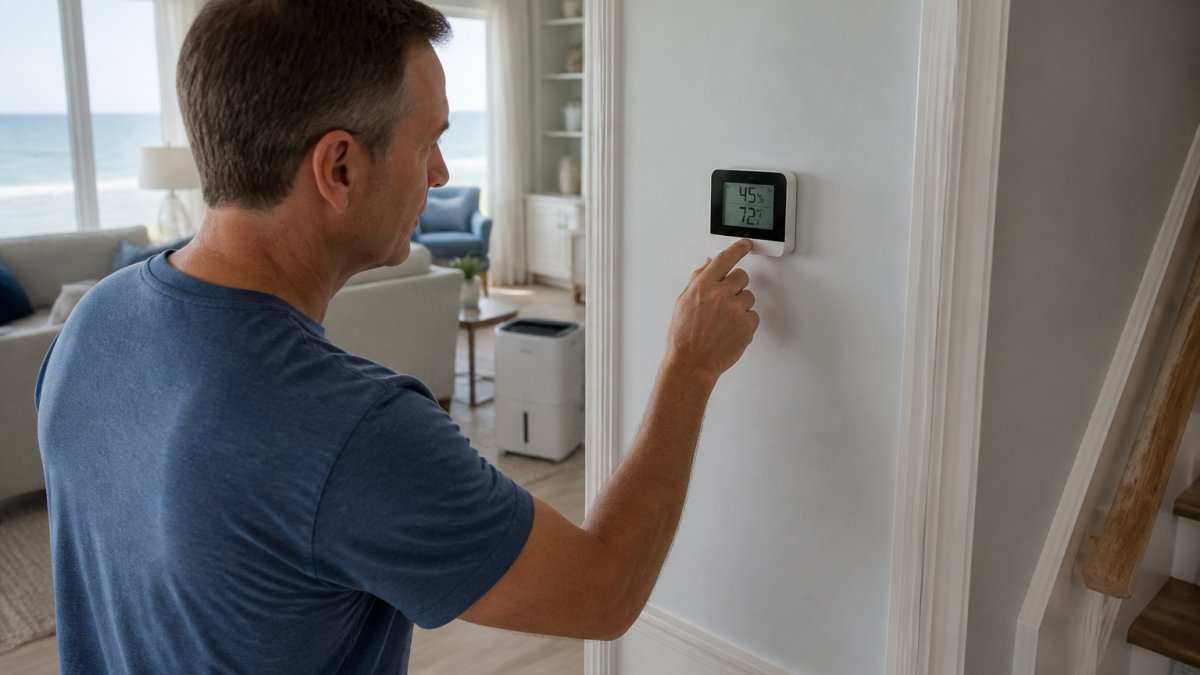
Step 2: Adjust Temperature and Ventilation
Air conditioning is your first line of defense. Cooling the air reduces its ability to hold moisture, so relative humidity drops naturally.
Open windows strategically on dry days or early mornings when outdoor humidity is lower, for 15-30 minutes, to exchange humid indoor air for drier outdoor air.
Run exhaust fans in bathrooms and kitchens during and for 20 minutes after showers or cooking. They pull moisture-laden air out directly, make sure they vent outside, not into your attic.
Ensure proper ventilation. Poor airflow traps moisture; circulating fans help humidity distribute evenly and prevent pockets of high moisture near your flooring.
Step 3: Use Air Conditioning, Dehumidifiers, or Humidifiers
Air conditioning is the most effective tool. It removes moisture while cooling.
Dehumidifiers target humidity directly. For coastal homes, a 50-70 pint dehumidifier works well for most living spaces. Place it in the area with the most flooring exposure.
Humidifiers are the opposite tool, use them only in winter if your home drops below 30% humidity. Most coastal homes don't need them. If you use one, set it to stop at 45% humidity.
The key: pick one primary tool (usually AC or a dehumidifier) and stick with it. Switching creates humidity swings worse than steady high humidity.
Step 4: Prevent Standing Water and Clean Spills Immediately
This is non-negotiable. Any spill on hardwood or laminate flooring needs immediate attention:
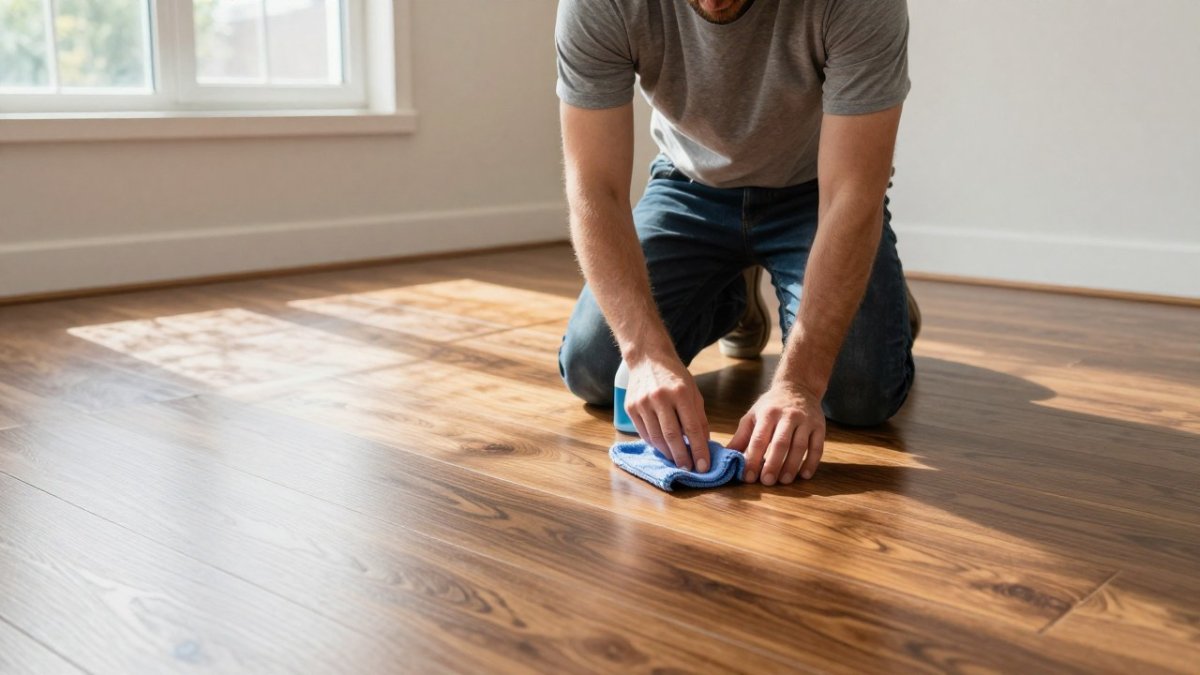
- Wipe up spills within 5 minutes. Use a dry cloth, not a wet mop. If water sits, it penetrates the wood.
- Dry the area completely. After wiping, use a towel to dry the spot again. If you see any shine or dampness, keep drying.
- Check under rugs and furniture. Water can hide under these and slowly damage the floor underneath.
- Use floor mats at entryways and near water sources (kitchen, bathroom). They catch drips before they hit the wood.
- Fix leaks immediately. A slow drip from a pipe or roof leak will eventually cause buckling. Don't wait.
- Prevent pet accidents by using absorbent pads in areas where pets spend time. Clean accidents right away with a dry cloth.
Standing water is how most buckling starts. A burst pipe, backed-up toilet, or major spill can cause visible damage in 24-48 hours, the faster you dry it, the better your chances of avoiding permanent damage.
How to Prevent Laminate Flooring From Buckling in High-Moisture Areas
Laminate is more vulnerable to moisture than engineered wood because the core is often made from compressed wood fibers that absorb water quickly.
Installation matters most. Laminate needs an underlayment with a moisture barrier between the subfloor and the laminate, blocking moisture from below.
Acclimation is critical. Before installation, laminate boxes should sit in your home for 48-72 hours so the material adjusts to your humidity level.
Seal the edges. Water enters laminate primarily through the edges where planks meet. Some installers apply a moisture-resistant sealant to edges before laying the floor. This adds protection.
Avoid laminate in bathrooms and kitchens if humidity is high. These rooms have constant moisture exposure. Luxury vinyl plank (LVP) or engineered hardwood with a moisture barrier is safer in these areas.
Best Flooring for High Humidity: Material Choices That Resist Moisture Damage
Not all flooring handles humidity equally. If you're replacing buckled floors or building new, material choice matters:
Luxury vinyl plank (LVP) is the most moisture-resistant option: 100% waterproof, it won't swell or buckle and tolerates standing water. It mimics wood or stone and is ideal for coastal homes, basements, and high-humidity areas.
Engineered hardwood sits between solid hardwood and LVP.
Solid hardwood is beautiful but the most vulnerable. It expands and contracts with humidity changes. If humidity control is inconsistent, solid hardwood will buckle.
Tile or stone is completely waterproof and ideal for bathrooms, kitchens, or any high-moisture zone. Grout lines require sealing, but the material itself won't buckle or warp.
Cork is naturally moisture-resistant and comfortable underfoot. It's less common but a solid option for humid climates if you like the aesthetic.
How to Fix Buckled Hardwood Floors and When to Call a Professional
If your floor is already buckled, the fix depends on severity.
Minor buckling (slight lifting, isolated to a few planks) sometimes responds to drying. Turn off humidifiers, run AC and dehumidifiers, and maintain 30-50% humidity for 2-4 weeks.
Moderate to severe buckling (multiple planks lifted, visible gaps, spongy feel) usually requires replacement.
When to call a professional:
- If more than 10-15% of your floor is affected
- If you can't identify the moisture source
- If the subfloor feels soft or spongy (sign of structural damage)
- If you suspect mold growth
- If the buckling happened after a major water event
A flooring professional can assess the damage, identify the moisture source, and recommend repair or replacement. We can evaluate whether drying will work or replacement is necessary.
Cost consideration: Minor repairs might run $300-800. Full replacement of affected areas can range higher depending on the extent of damage.
Prevention Checklist: Protect Your Flooring Before and After Installation
Use this checklist before and after your flooring project to minimize buckling risk:
| Phase | Action | Frequency |
|---|---|---|
| Before Installation | Check subfloor moisture with a meter (should be under 12%) | Once before work starts |
| Before Installation | Acclimate flooring material to your home for 48-72 hours | Once before installation |
| Before Installation | Install moisture barrier underlayment | During installation |
| Before Installation | Leave 1/2-inch expansion gaps around all perimeter walls | During installation |
| Ongoing | Measure indoor humidity weekly with a hygrometer | Weekly during humid months |
| Ongoing | Keep humidity between 30-50% year-round | Continuous |
| Ongoing | Run AC or dehumidifier during humid months | May-September minimum |
| Ongoing | Wipe spills immediately with a dry cloth | As needed |
| Ongoing | Fix leaks or water damage within 24 hours | As needed |
| Ongoing | Use exhaust fans in bathrooms and kitchens | During and 20 min after use |
| Ongoing | Inspect floor monthly for signs of cupping, warping, or buckling | Monthly during humid season |
Installation-specific steps:
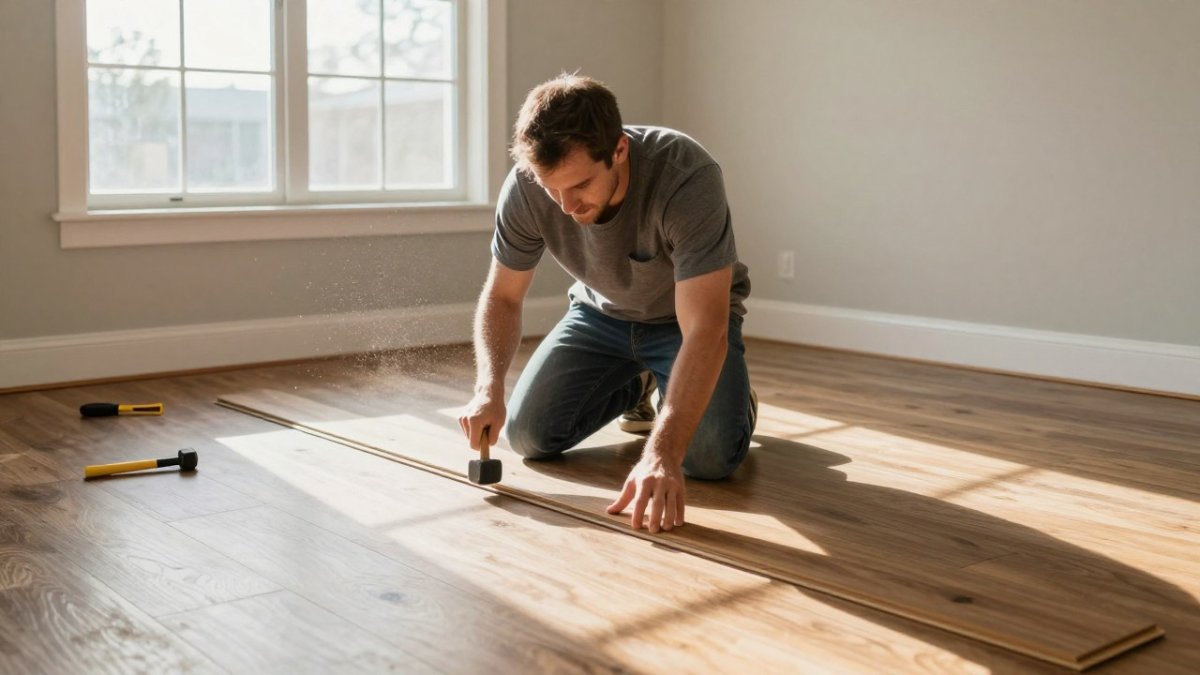
- Ensure the subfloor is dry before any flooring is installed.
- Use a moisture retarder or barrier between the subfloor and flooring material.
- Leave proper expansion gaps (usually 1/2 inch) around all walls and fixed objects.
- Use recommended fasteners and spacing per manufacturer specs.
- Don't install flooring during high-humidity periods if possible. If you must, run dehumidifiers for several days before and after installation.
Post-installation steps:
- Maintain humidity at 30-50% from day one.
- Don't place heavy furniture or appliances on the floor for at least 48-72 hours after installation.
- Avoid wet cleaning for the first week. Use dry methods instead.
- Monitor the floor weekly for the first month. Check for gaps, lifting, or unusual sounds.
Preventing flooring buckling in humidity comes down to three things: monitor moisture, control humidity, and act fast on spills or leaks.
Prevention is far cheaper and easier than replacement: a dehumidifier costs $200-500, while replacing buckled flooring costs thousands. By staying ahead of humidity and addressing moisture quickly, you protect your investment and keep your home comfortable.
If you're planning a flooring project or dealing with moisture issues, the EPA's guidance on indoor air quality and humidity offers official recommendations for healthy home moisture levels.
Frequently Asked Questions
Why are my floors buckling due to humidity?
Hardwood and laminate flooring absorb moisture from humid air, causing the wood to expand. When expansion happens unevenly across the floorboards or when moisture penetrates from below, the planks cup, warp, or buckle upward. Relative humidity above 55% creates an environment where moisture moves into the wood faster than it can stabilize. Coastal areas with salt air and seasonal humidity spikes are especially prone to this damage.
What is the ideal indoor humidity for hardwood floors?
Hardwood flooring performs best at 30-50% relative humidity year-round. Some manufacturers recommend 35-55% depending on the wood species and finish. Maintaining humidity in this range prevents both expansion (caused by excess moisture) and shrinkage (caused by dryness). Use a hygrometer to monitor indoor humidity levels, and adjust with air conditioning, dehumidifiers, or humidifiers as needed. Seasonal swings in humidity are common in coastal climates, so active monitoring is essential.
Will buckled floors go back down on their own?
Minor buckling may flatten if humidity levels return to normal and stay stable for weeks or months. However, significant buckling, where planks lift visibly or create tripping hazards, usually requires professional repair or replacement. The longer buckling persists, the more permanent the damage becomes. If you notice buckling, act quickly by identifying and fixing the moisture source, then controlling humidity. A flooring professional can assess whether drying will restore the floor or whether replacement is necessary.
Can a dehumidifier prevent hardwood floors from buckling?
Yes, a dehumidifier is one of the most effective tools for preventing flooring buckling. It removes excess moisture from the air, keeping relative humidity in the safe 30-50% range. Dehumidifiers work best when paired with proper ventilation and air conditioning. In coastal or humid climates, running a dehumidifier during peak humidity seasons (spring and summer) can prevent moisture from entering the wood. For larger homes or severe humidity, whole-home dehumidification systems offer better coverage than portable units.
Ready to protect your flooring with the right moisture-resistant materials and expert installation? Floor Coverings International of Myrtle Beach offers a wide range of premium flooring options designed to handle coastal humidity and moisture challenges. Our team provides in-home consultations to help you select the best flooring for your specific environment and needs. Get a Free Estimate today and let us show you how to keep your floors beautiful and damage-free for years to come.