 ultimate-guide
Durable Carpet Options for High Traffic Areas
Table of Contents
- How to Choose Durable Carpet Options for High Traffic Areas
- Fiber Comparison: Which Most Durable Carpet Fiber Fits Your Home?
- Carpet Construction and Pile Type: What the Labels Actually Mean
- Low-Pile Carpet for Hallways: Why Tight Weaves Handle Foot Traffic
- Best Carpet for Stairs: Safety, Resilience, and Style
- Carpet Maintenance for Busy Homes: Care Routines That Extend Life
- Padding, Installation Quality, and Lifecycle Cost
- Frequently Asked Questions
Last Updated: October 16, 2026
How to Choose Durable Carpet Options for High Traffic Areas
Durable carpet options for high traffic areas resist crushing, matting, and fiber wear. We help coastal homeowners match those specs to real rooms instead of guessing from a showroom sample.
A carpet that survives a guest bedroom for a decade can look worn in a hallway within two or three years. Traffic patterns, soil, moisture, and installation quality decide the outcome.
Fiber Comparison: Which Most Durable Carpet Fiber Fits Your Home?
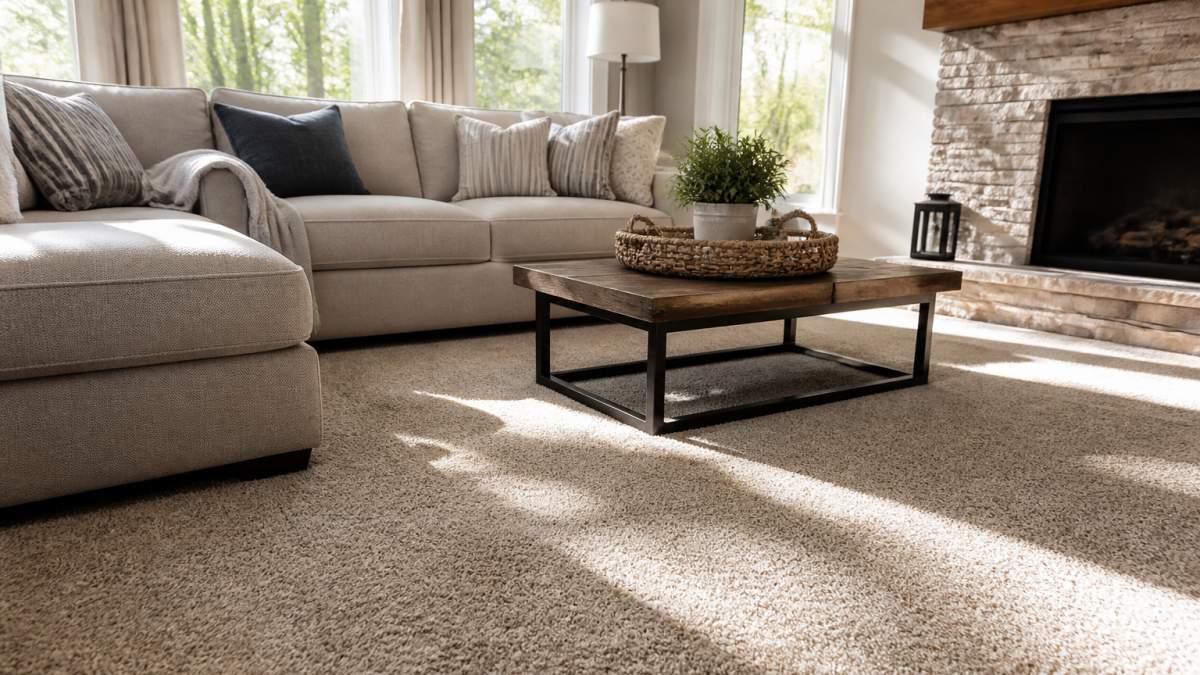
The most durable carpet fiber for high traffic areas is nylon, followed closely by Triexta, a polyester variant engineered for toughness. Both bounce back from compression and resist matting better than standard polyester or polypropylene.
Here is how the main fibers compare on the qualities that matter in a busy household:
| Fiber | Durability | Stain Resistance | Best For |
|---|---|---|---|
| Nylon | Excellent | Good with treatment | Hallways, stairs, living rooms |
| Triexta | Excellent | Excellent | Pet owners, kids, busy homes |
| Polyester | Moderate | Excellent | Low-traffic bedrooms |
| Polypropylene (olefin) | Moderate | Excellent | Basements, outdoor-adjacent spaces |
| Wool | Very good | Moderate | Formal rooms, natural-fiber preference |
Nylon's advantage is resilience: its fibers spring back after being crushed, which is why it holds up in hallways and on stairs. Triexta adds superior stain resistance because color is built into the fiber.
Nylon and Triexta: The Top Performers
Nylon remains the benchmark for wear resistance, recovering its shape under furniture and constant footfall. Look for high twist level and tight fiber density, since those specs predict longevity better than fiber alone.
Triexta delivers similar resilience with better stain performance, spills bead up rather than soak in, which is why pet owners gravitate toward it. It is more heat-sensitive, so avoid high-temperature steam cleaning.
Polyester, Polypropylene, and Wool: Where They Work Best
Polyester is soft and stain-resistant but prone to matting under heavy use, so it suits bedrooms, not hallways.
Polypropylene (olefin) handles moisture well and resists fading, making it reasonable for basements or beach entries. It lacks nylon's resilience, so it flattens faster under heavy use.
Wool offers excellent resilience and a look synthetics struggle to match. It resists crushing and cleans up well, but costs more and stains more readily than treated synthetics.
Carpet Construction and Pile Type: What the Labels Actually Mean
Construction determines performance as much as fiber does. Two carpets with identical nylon content can wear very differently depending on pile type, density, and twist.
- Loop pile: Yarn loops are left intact, creating a firm, durable surface that hides footprints and resists crushing
- Cut pile: Loops are cut, giving a softer feel but more susceptibility to matting and shading
- Low pile: Short fibers that stand up to heavy foot traffic and are easy to clean
Three specs predict durability more reliably than marketing language. Fiber density measures how tightly yarn is packed, denser is better. Face weight is fiber per square yard, with higher numbers generally meaning more durability. Twist level describes how tightly yarn is twisted; tight twist resists unraveling and matting.
Low-Pile Carpet for Hallways: Why Tight Weaves Handle Foot Traffic
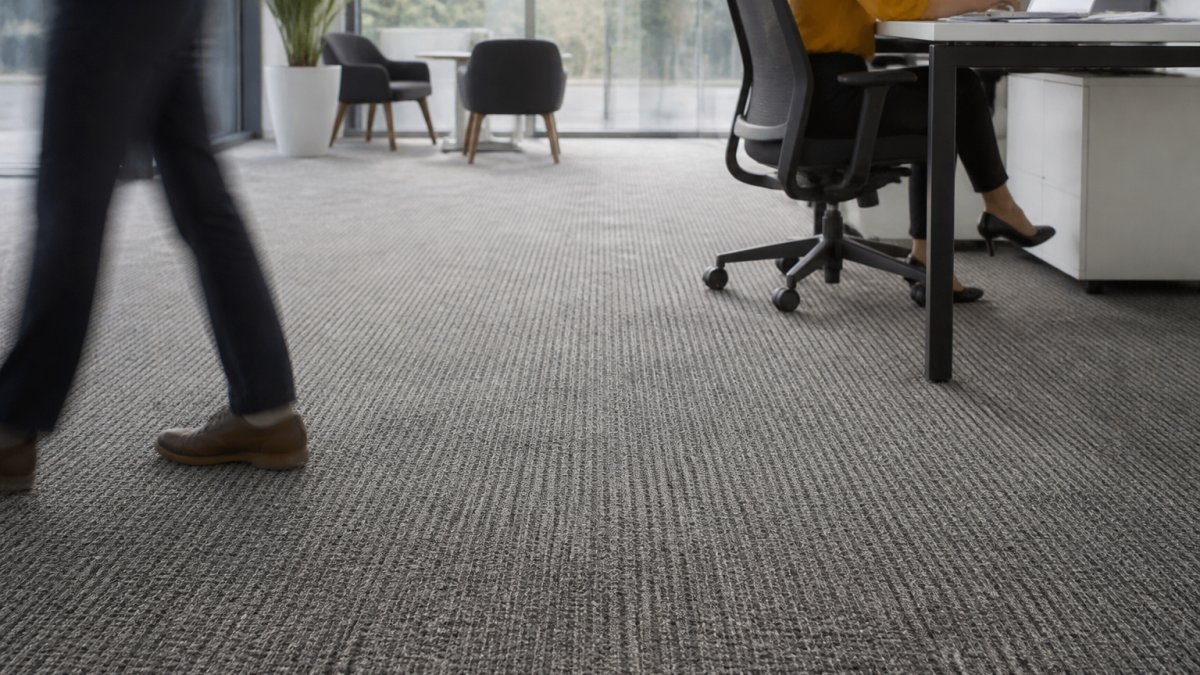
Low-pile carpet for hallways is the practical choice because short, tightly woven fibers resist crushing and hide tracking.
A common mistake is choosing plush, high-pile carpet for a hallway because it feels good in the store; within months it shows traffic lanes no vacuuming removes.
Patterned and geometric designs hide soil and traffic marks well, which is why they remain popular in hallways and on stairs.
Best Carpet for Stairs: Safety, Resilience, and Style
The best carpet for stairs balances grip, resilience, and a firm backing, because stairs combine concentrated traffic with a safety risk.
For stairs, choose low-pile or tight loop carpet with strong resilience. Nylon and Triexta perform well because they recover from constant compression on each tread.
Patterned and flat-weave carpets add traction and hide wear on tread edges where shoes land.
Carpet Maintenance for Busy Homes: Care Routines That Extend Life
Carpet maintenance for busy homes comes down to three habits: frequent vacuuming, quick spill response, and periodic professional cleaning. These routines extend carpet life more than any single product choice, but the details differ by fiber.
A realistic cleaning schedule by traffic level
- Hallways, stairs, and entryways: Vacuum at least twice a week, daily with pets or outdoor play. These zones collect the most grit, and grit grinds fiber resilience away.
- Living rooms and family rooms: Vacuum once or twice a week. Treat a walkway between two doorways as a hallway.
- Bedrooms and low-traffic rooms: Once a week, plus a pass after any illness or spill.
Fiber-specific care differences
The right routine depends on the carpet's material:
- Nylon: Tolerates most cleaning methods, including hot-water extraction. Periodic deep cleaning helps because soil trapped at the pile base dulls color and accelerates matting.
- Triexta: Excellent stain resistance but more heat-sensitive than nylon. Avoid high-temperature steam cleaning and check manufacturer guidance before renting an extractor.
- Polyester: Resists water-based stains but is prone to oil-based soiling. Mild detergent and prompt blotting handle most spills.
Spot treatment that actually works
Treat spills immediately by blotting, never rubbing, working from the outside inward with a clean white cloth and changing it as it picks up soil. For protein-based spills like milk or pet accidents, a diluted enzyme cleaner beats a general spot remover. Rinse with clean water and blot dry to avoid residue that attracts new dirt.
Prevention beats cleaning
- Use doormats at every entry. A two-mat system, coarse outdoor plus absorbent indoor, removes far more soil than one mat alone.
- Ask guests and family to remove shoes in high-traffic homes. This single habit dramatically reduces tracked-in soil.
- Rotate furniture periodically to even out compression marks, and use glides under heavy pieces.
Warranty requirements you should not ignore
Most manufacturer warranties require specific maintenance to stay valid:
- Professional cleaning at set intervals, often every 12 to 18 months
- Use of approved cleaning products and methods
- Proof of purchase and, sometimes, receipts from professional cleanings
Skipping required maintenance can void coverage for stain, wear, or texture-retention claims. Read the warranty before you buy and keep a log of cleaning dates and products.
According to the Carpet and Rug Institute's cleaning guidance, prompt spot treatment and routine deep cleaning help carpets retain their appearance and can help preserve warranty coverage. Stain resistance varies by fiber and treatment, so check the manufacturer's care instructions before using any cleaner.
Padding, Installation Quality, and Lifecycle Cost
Padding and installation quality often decide whether a durable carpet reaches its full lifespan. A quality pad absorbs impact, reduces noise, and protects the backing from grinding against the subfloor. Thin or worn padding undermines even the toughest fiber.
How to read durability specifications
Four numbers on a carpet sample tell you more about longevity than any marketing claim:
- Face weight: Ounces of fiber per square yard. Higher is generally more durable, but face weight alone is misleading, a dense low-pile carpet with lower face weight can outlast a loose high-pile carpet with higher.
- Density: How tightly yarn is packed, usually ounces per cubic yard. Denser carpet resists crushing and matting; look for higher density in hallways and on stairs.
- Twist level: Turns per inch the yarn receives. Tightly twisted yarn (high twist or heat-set) resists unraveling and matting far better than loose twist.
Ask for all four numbers in writing. A retailer who can produce them understands what makes carpet last.
Padding: the spec most buyers ignore
Padding is sold by density and thickness, and the two are not the same. A thick, low-density pad compresses quickly and can void a warranty; a thinner, higher-density pad holds its shape and supports the carpet above it.
- Density: Measured in pounds per cubic foot. Higher density means better support and longer life. Common residential ranges run about 6 to 8 pounds per cubic foot, with firmer pads for heavy traffic.
- Thickness: Typically 6 to 8 pounds of density at 7/16 inch thickness is a common residential spec. Very thick pads (over 1/2 inch) can stress the backing and are often excluded by warranties.
- Material: Bonded urethane and rebond are common and durable. Frothed foam is lighter and less supportive. Rubber pads offer excellent grip, especially on stairs.
Check the warranty for approved pad specs. Using the wrong pad is one of the most common reasons a wear or texture-retention claim is denied.
Installation quality
Even the best carpet fails if installed poorly. Key factors:
- Power stretching: Use a power stretcher, not just a knee kicker, to prevent ripples and buckling.
- Seam placement: Keep seams away from high-traffic paths and direct light where possible. Poorly placed seams can delaminate or show.
- Stair installation: Stairs require tight, secure installation with a firm pad. Loose carpet on a tread is a safety hazard.
Lifecycle cost: the math most buyers skip
A cheaper carpet that flattens in a few years usually costs more over time than a durable option, once you factor in replacement, labor, and disruption.
A simple way to compare options:
- Estimate the installed cost per square foot, including carpet, pad, labor, and removal of old flooring.
- Estimate the realistic lifespan in your busiest room based on fiber, density, and twist.
- Divide installed cost by expected years to get a rough cost per year.
- Add estimated cleaning and maintenance costs over that period.
A lower-priced carpet with a short lifespan often costs more per year than a denser, better-constructed carpet that lasts longer.
For coastal homes dealing with humidity and salt air, moisture-resistant options and proper installation protect against buckling and warping.
This is where an in-home consultation earns its keep. If you want a floor that holds up to a busy household, the EPA's guidance on indoor air quality and flooring is worth a look before you finalize materials.
Frequently Asked Questions
What type of carpet is most durable for high-traffic areas?
Nylon and Triexta (PTT) are the most durable carpet fibers for high-traffic areas. Both resist matting and crushing well. Nylon offers strong resilience and stain resistance when treated, while Triexta adds built-in stain protection and a softer feel. Look for tight loop or cut-pile styles with high twist levels and dense face weights. Pairing these fibers with quality padding and professional installation extends their lifespan further.
Is nylon or polyester carpet better for busy areas?
Nylon outperforms polyester in busy areas because it bounces back from foot traffic better and resists matting longer. Polyester is softer and often more affordable, but it tends to flatten in hallways and on stairs. For homes with pets or heavy foot traffic, nylon or Triexta is the stronger choice. Polyester can work in lower-traffic rooms like bedrooms. Always check the manufacturer's warranty for wear and texture retention.
What carpet pile is best for hallways and stairs?
Low-pile and loop-pile carpets are best for hallways and stairs. Their tight, dense construction resists crushing and matting from constant foot traffic. Cut-pile styles with a short height and tight twist also work well. Avoid deep shag or loose, tall piles in these areas because they flatten quickly and can be a tripping hazard on stairs. A low-pile carpet for hallways balances durability with easy cleaning.
Is loop pile carpet a good choice for high-traffic areas?
Yes, loop pile carpet is an excellent choice for high-traffic areas. The loops are woven tightly, which makes the surface resistant to crushing and matting. It also hides footprints and vacuum marks better than some cut-pile styles. However, loop pile can snag on pet claws or sharp objects, so consider a cut-pile or tip-sheared option if you have pets. Berber-style loop carpets are a popular durable option.
How do you keep carpet from showing traffic patterns?
Prevent traffic patterns by choosing a dense, resilient fiber like nylon or Triexta, using quality padding, and placing walk-off mats at entryways. Vacuum frequently with a quality vacuum, and rotate area rugs to distribute wear. Professional cleaning every 12 to 18 months removes embedded soil that dulls fibers. For busy homes, a regular carpet maintenance routine that includes spot cleaning and periodic deep cleaning keeps the pile looking even.
How often should high-traffic carpet be professionally cleaned?
High-traffic carpet should be professionally cleaned every 12 months, or every 6 to 9 months in homes with pets, children, or heavy foot traffic. Regular vacuuming between cleanings removes loose soil before it settles into the pile. Professional hot-water extraction lifts embedded dirt and allergens, helping fibers stay resilient. Check your carpet warranty, as some require professional cleaning at set intervals to keep coverage valid.