 Listicle
Best Flooring for High Traffic Areas That Holds Up
Last Updated: November 17, 2026
Quick Summary
The best flooring for high traffic areas balances wear resistance, moisture resistance, and repairability, because no single material wins on every measure. Luxury vinyl plank suits busy family rooms and kitchens, porcelain tile handles entryways and mudrooms, and laminate works for budget living areas.
- Luxury vinyl plank combines a tough wear layer with water resistance and a convincing wood look.
- Porcelain is fired at higher temperatures than ceramic, making it denser and less porous.
- Standard laminate cores swell when water sits on seams, so keep it out of wet rooms.
- Luxury vinyl plank with a thick wear layer resists scratching from dog nails and accidents.
- Porcelain tile and luxury vinyl plank are commonly considered suitable for coastal homes.
Table of Contents
- Best Flooring for High Traffic Areas: What Actually Holds Up
- Vinyl Flooring for High Traffic Areas: LVP and LVT Explained
- Porcelain and Ceramic Tile for Heavy Foot Traffic
- Laminate Flooring for High-Traffic Areas: Where It Works
- The Most Durable Flooring for Dogs and Pet Households
- Most Durable Waterproof Flooring for Coastal Homes
- Carpet Tiles, Natural Stone, and Polished Concrete for Busy Spaces
- Book an In-Home Flooring Consultation Before You Buy
- Frequently Asked Questions
Best Flooring for High Traffic Areas: What Actually Holds Up
The best flooring for high traffic areas balances wear resistance, moisture resistance, and repairability, because no single material wins on every measure.
Below, we break down each option by where it works, where it fails, and how to choose a floor you won't regret in three years.
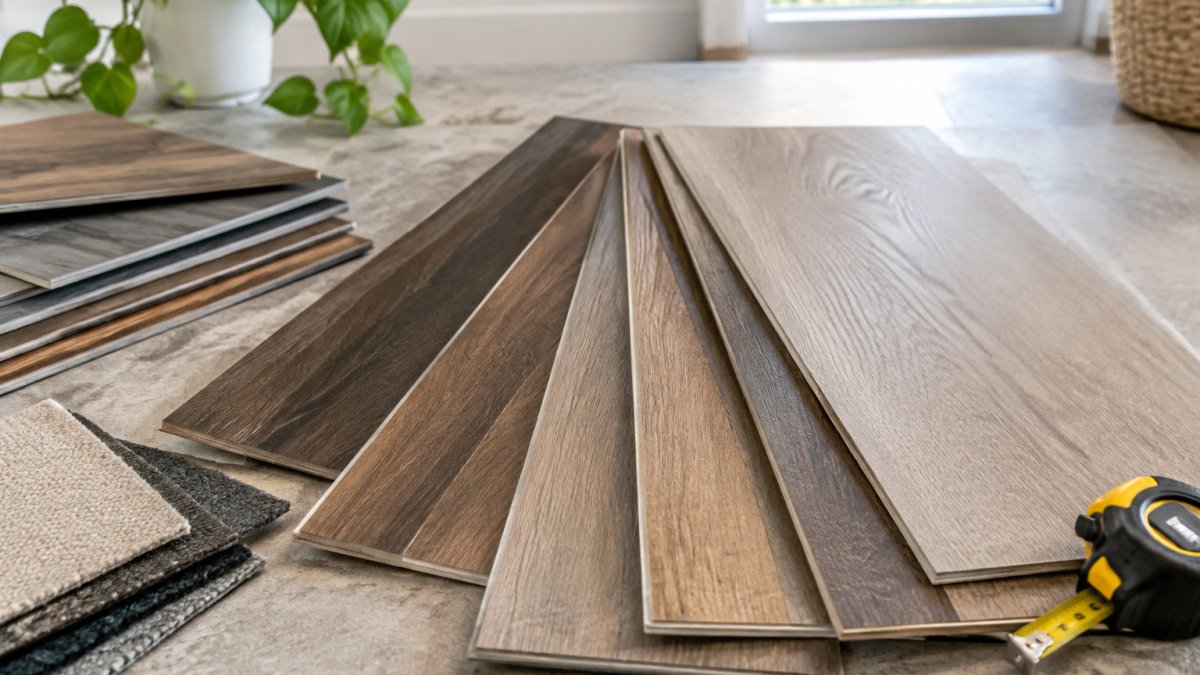
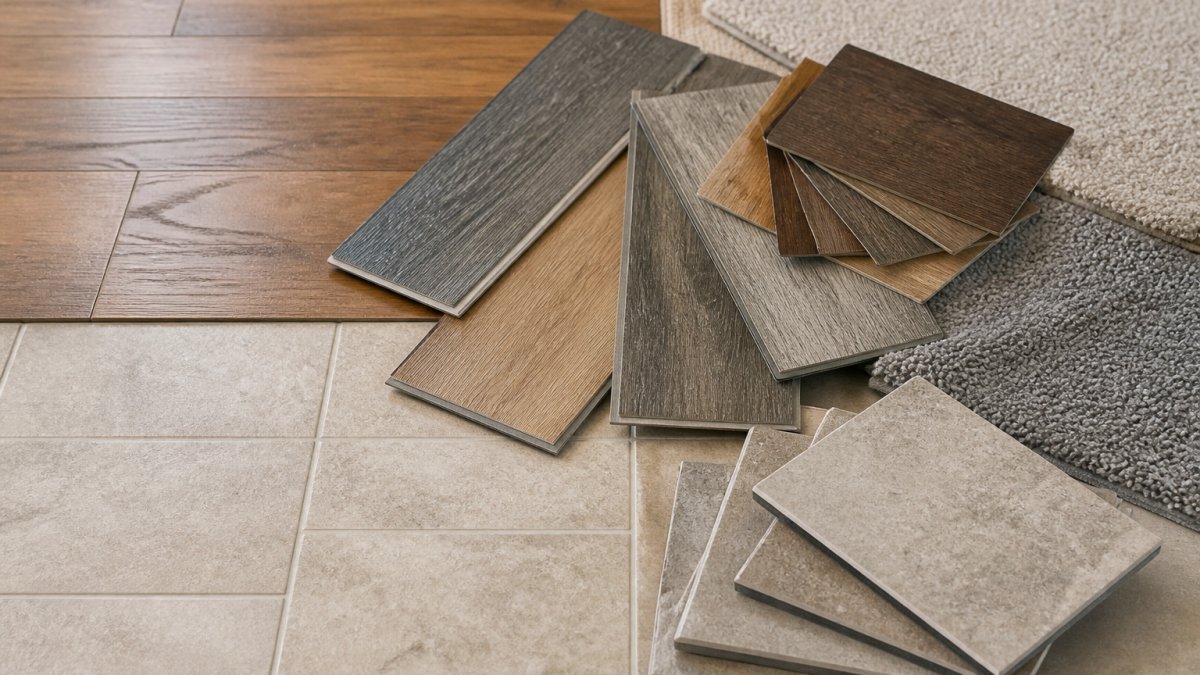
Durability is a flooring material's ability to resist wear, impact, moisture, and staining over years of foot traffic. The five options that matter most are vinyl, tile, laminate, carpet tile, and stone.
| Material | Best For | Watch Out For |
|---|---|---|
| Luxury vinyl plank | Busy family rooms, kitchens | Thin wear layers dent |
| Porcelain tile | Entryways, mudrooms | Hard, cold underfoot |
| Laminate | Budget-friendly living areas | Swells if water sits |
| Carpet tile | Offices, basements | Traps sand and pet hair |
| Natural stone | High-impact entries | Needs sealing |
Vinyl Flooring for High Traffic Areas: LVP and LVT Explained
Luxury vinyl plank is a practical option for many busy homes, because it combines a tough wear layer with water resistance and a convincing wood look. LVP comes in long planks, while LVT comes in tile shapes that mimic stone or ceramic.
The number that matters most is the wear layer, the clear top coat measured in mils. A thicker wear layer resists scratches and surface wear longer.
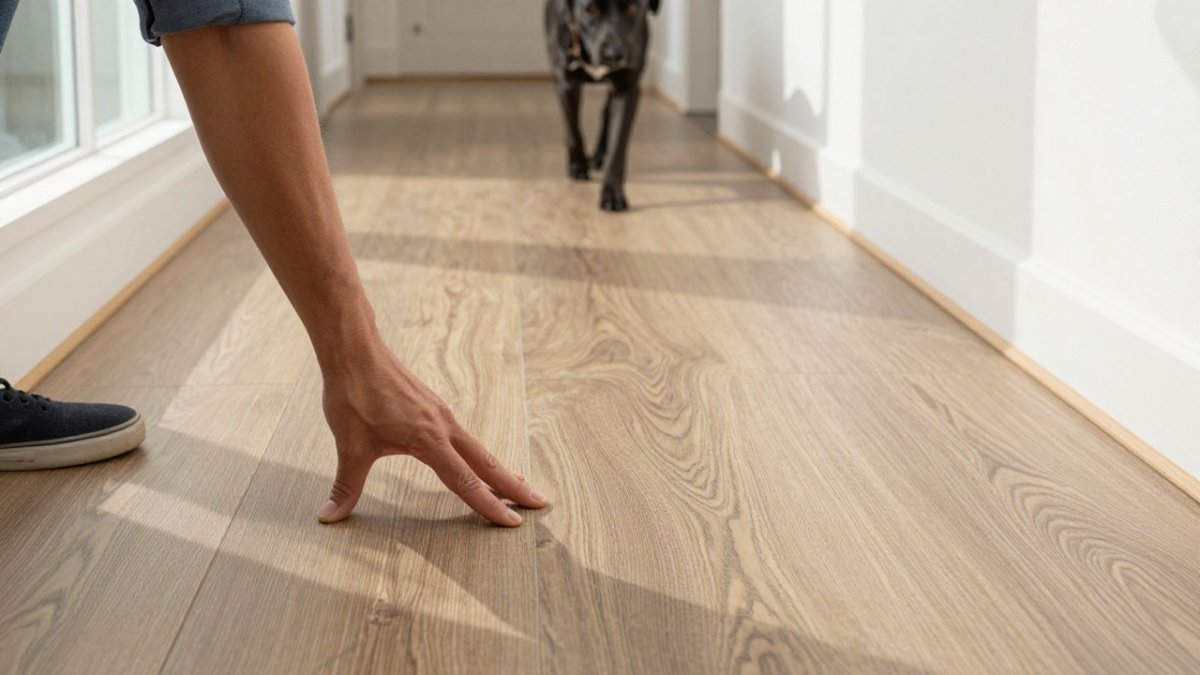
Wear-layer thickness is only one measure, though.
Comparing brands before you commit? Our guide to the 7 best luxury vinyl plank brands breaks down wear layers and construction side by side.
Best for: kitchens, hallways, and pet households. Skip if: you want the feel of real wood underfoot.
Porcelain and Ceramic Tile for Heavy Foot Traffic
Porcelain tile is a durable option for scratch and moisture resistance, and is often chosen for entryways, mudrooms, and bathrooms. Fired at higher temperatures than ceramic, porcelain is denser and less porous, so it shrugs off water and heavy foot traffic.
Ceramic tile costs less and works fine in lower-traffic rooms, but its softer body chips more easily under impact. Both handle cleaning with a mop and don't care about spills.
Two trade-offs deserve honesty. Tile is hard underfoot, so standing comfort suffers in kitchens. Grout lines also collect dirt and need sealing in wet areas. A large-format tile with narrow grout lines cuts cleaning time.
Watch out: skipping a proper subfloor prep on tile leads to cracked edges and hollow spots within months. Deflection and flatness matter more than the tile itself.
Best for: entries, bathrooms, laundry rooms. Skip if: you want warmth and quiet underfoot.
Laminate Flooring for High-Traffic Areas: Where It Works
Laminate flooring is an option for living areas and bedrooms on a budget, because its melamine wear surface resists scratches and dents well for the price.
Where laminate struggles is moisture. Standard laminate cores swell when water sits on seams, so it belongs out of bathrooms, laundry rooms, and any space prone to standing water. Water-resistant laminate exists, but it is not waterproof.
Best for: living rooms, hallways, rentals. Skip if: your home sees frequent spills or high humidity.
The Most Durable Flooring for Dogs and Pet Households
Luxury vinyl plank with a thick wear layer is often considered a good option for dog households, because it resists scratching from nails and handles accidents without swelling.
Avoid solid hardwood and standard laminate in pet-heavy homes. Both show claw marks, and laminate swells at the seams after repeated accidents. Carpet traps hair and odor in the pad, which no amount of cleaning fully fixes.
For a deeper look at scratch and stain performance, read our guide to choosing pet-friendly flooring for dogs.
Best for: multi-pet households. Skip if: you insist on natural wood throughout.
Most Durable Waterproof Flooring for Coastal Homes
Porcelain tile and luxury vinyl plank are commonly considered suitable options for coastal homes, as both are generally resistant to moisture. Coastal humidity punishes any floor with a wood-fiber core, and salt air accelerates wear on finishes.
Ventilation and a properly sealed subfloor matter as much as the material. A waterproof floor over a damp slab still fails.
Our flooring guide for humid coastal homes covers moisture barriers and acclimation in detail.
Best for: beach houses and ground-floor rooms. Skip if: you're set on hardwood and willing to manage the risk.
Carpet Tiles, Natural Stone, and Polished Concrete for Busy Spaces
Pets and children. For hard surfaces, polished concrete and porcelain tile handle accidents and muddy footprints without staining, but both are unforgiving on falls, so area rugs and slip-resistant finishes matter in playrooms.
Muddy entryways.
Commercial corridors and offices.
Group homes and multi-family units.
For busy carpeted spaces, our guide to durable carpet options for high traffic areas compares backing and fiber types.
Best for: offices, basements, entries. Skip if: comfort and warmth top your list.
Book an In-Home Flooring Consultation Before You Buy
Samples look different in your home, and that's the strongest argument for seeing flooring in your own light before you commit. Showroom lighting flatters every finish; afternoon sun through your windows tells the truth.
Here's how to prepare:
- Note which rooms see the most foot traffic
- List pets, kids, and any moisture-prone areas
- Check subfloor condition and note squeaks or dips
- Set a realistic budget per room
- Ask about wear layer, warranty terms, and repair options
Curious why this beats a showroom trip? Read why in-home consultations beat showroom visits.
Choosing flooring for a busy home comes down to matching material to your real traffic, moisture, and pets, not to a showroom display. Floor Coverings International of Myrtle Beach brings premium flooring and carpet options to your door, with a focus on enhancing your space's beauty and functionality and service that exceeds expectations. Get started with Floor Coverings International of Myrtle Beach and choose a floor built for the way you actually live.
Frequently Asked Questions
Which flooring is best for heavy traffic?
Porcelain tile and luxury vinyl plank handle heavy traffic best for most homes. Porcelain is a dense, moisture-resistant option often chosen for entryways and kitchens. LVP brings water resistance and a wood look at a lower installed cost. When comparing options, look at wear layer thickness and manufacturer ratings before you buy. For commercial spaces, low-pile carpet tiles and polished concrete are worth pricing too.
Is vinyl flooring a good choice for high-traffic areas?
Yes. Vinyl flooring for high traffic areas works because the wear layer takes the abrasion instead of the pattern underneath. A thicker wear layer resists scratches and stains better, and the planks handle moisture in kitchens, hallways, and bathrooms. Check the wear layer thickness and the manufacturer's traffic rating before you commit, since thin vinyl in a busy hallway can show wear within a few years.
What type of flooring is best for high traffic areas and pets?
Luxury vinyl plank and porcelain tile are often considered suitable options for dog households. Both resist scratches from claws and cleanup after accidents, and neither absorbs moisture the way carpet does. LVP is softer underfoot and quieter than tile, which matters in living areas. Look for a wear layer rated for residential or commercial traffic, and Low-pile carpet tiles work in bedrooms where comfort matters more than water resistance.
What is the most durable waterproof flooring?
Porcelain tile is commonly considered a moisture-resistant flooring option for many homes. The surface will not swell, warp, or absorb water, and it resists scratches and stains in bathrooms, kitchens, and laundry rooms. Luxury vinyl plank is the close second and easier to install over most subfloors. Laminate has improved water resistance but still depends on sealed seams.
How do you choose flooring for a busy living room or hallway?
Start with the traffic level, then match the material to it. Hallways and entryways see the most foot traffic, so pick scratch and moisture resistance first: porcelain tile, LVP, or laminate with a strong wear layer. Living rooms need comfort and acoustics as well, so LVP or low-pile carpet tiles may fit better than stone. Check the subfloor, plan for transitions between rooms, and get an in-home consultation