 Ultimate guide
Durable Commercial Flooring for Small Businesses: A Guide
Last Updated: November 24, 2026
Quick Summary
The most durable commercial flooring for small businesses is luxury vinyl tile or plank with a thick wear layer, because it resists scratches, moisture and heavy foot traffic while staying affordable to install and repair. Commercial-grade resilient flooring is a common starting point for most owners, with specialty surfaces considered for specific areas.
- Durability in commercial flooring depends on wear layer thickness, core stability and install quality.
- Rubber flooring rates very high for impact and moisture resistance, suiting gyms and commercial kitchens.
- Carpet tile rates medium and stains in food-service or entry areas.
- Modular formats like LVT and carpet tile let you swap a damaged piece instead of replacing a room.
- Subfloor prep checks moisture levels, flatness and existing floor condition before installation.
Table of Contents
- What Is the Most Durable Commercial Flooring for a Small Business?
- Best Commercial Flooring Options Compared by Durability and Cost
- Heavy Duty Commercial Vinyl Flooring: LVT, Plank, Tile and Sheet
- Rubber Commercial Flooring for Gyms, Kitchens and Back-of-House Areas
- Commercial Office Flooring: Balancing Acoustics, Comfort and Appearance
- Subfloor Prep, Installation and Repair Without Closing Your Doors
- Maintenance, Lifecycle Cost and Building Code Requirements
- Getting a Free In-Home or On-Site Flooring Estimate
- Frequently Asked Questions
What Is the Most Durable Commercial Flooring for a Small Business?
The most durable commercial flooring for small businesses is luxury vinyl tile or plank with a thick wear layer, because it resists scratches, moisture and heavy foot traffic while staying affordable to install and repair.
That answer holds up across most retail, office and hospitality spaces. Durability in commercial flooring is really three things stacked together: wear layer thickness, core stability and install quality.
Below, we compare the best commercial flooring options by durability and cost, then cover vinyl, rubber and office-specific choices, plus subfloor prep, maintenance and how to get an estimate.
Best Commercial Flooring Options Compared by Durability and Cost
Ranking commercial flooring comes down to matching material to traffic, moisture and budget. A small business rarely needs the toughest floor on the market; it needs the right floor for its specific foot traffic, spills and hours.
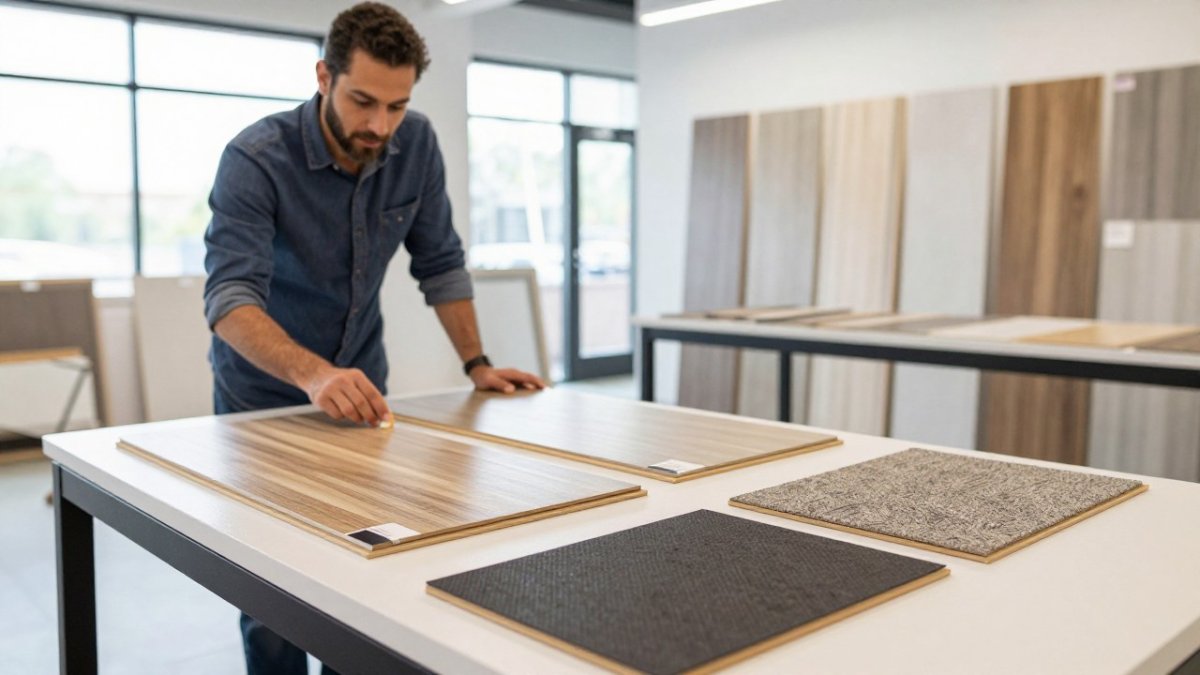
Here is how the main categories stack up.
| Material | Durability Rating | Best For | Watch Out For |
|---|---|---|---|
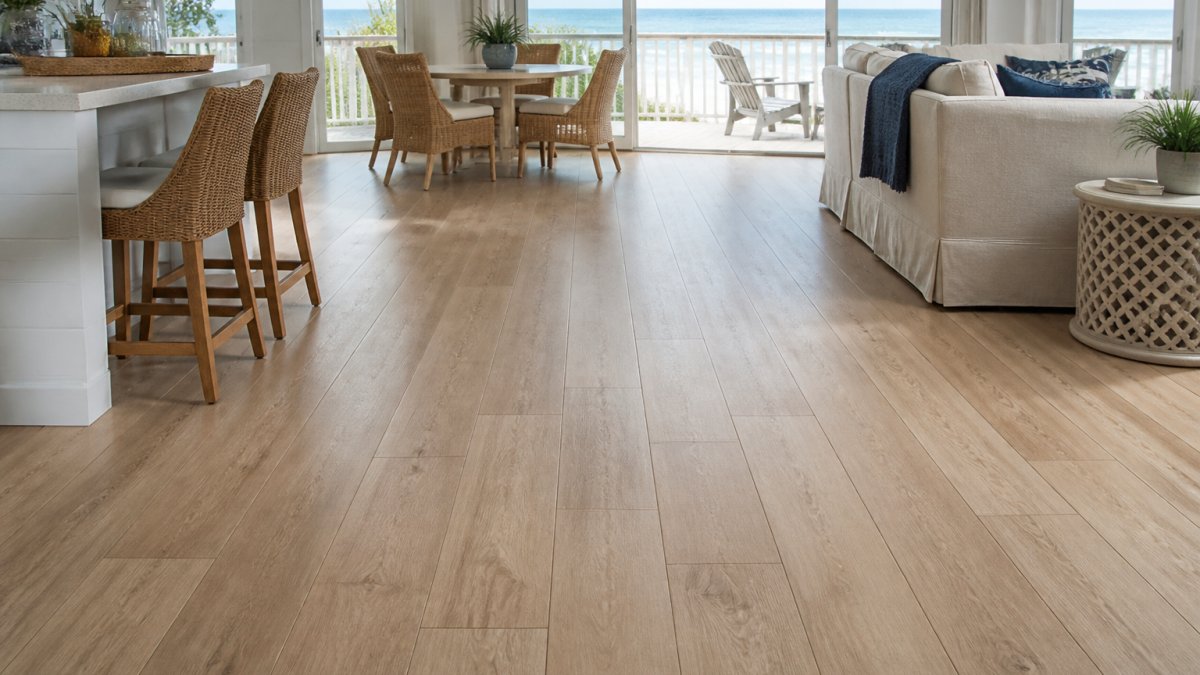
| LVT / vinyl plank | High | Retail, offices, clinics | Thin wear layers wear fast |
| Sheet vinyl | High | Kitchens, back-of-house | Seams need sealing |
| Rubber | Very high | Gyms, kitchens, labs | Limited color range |
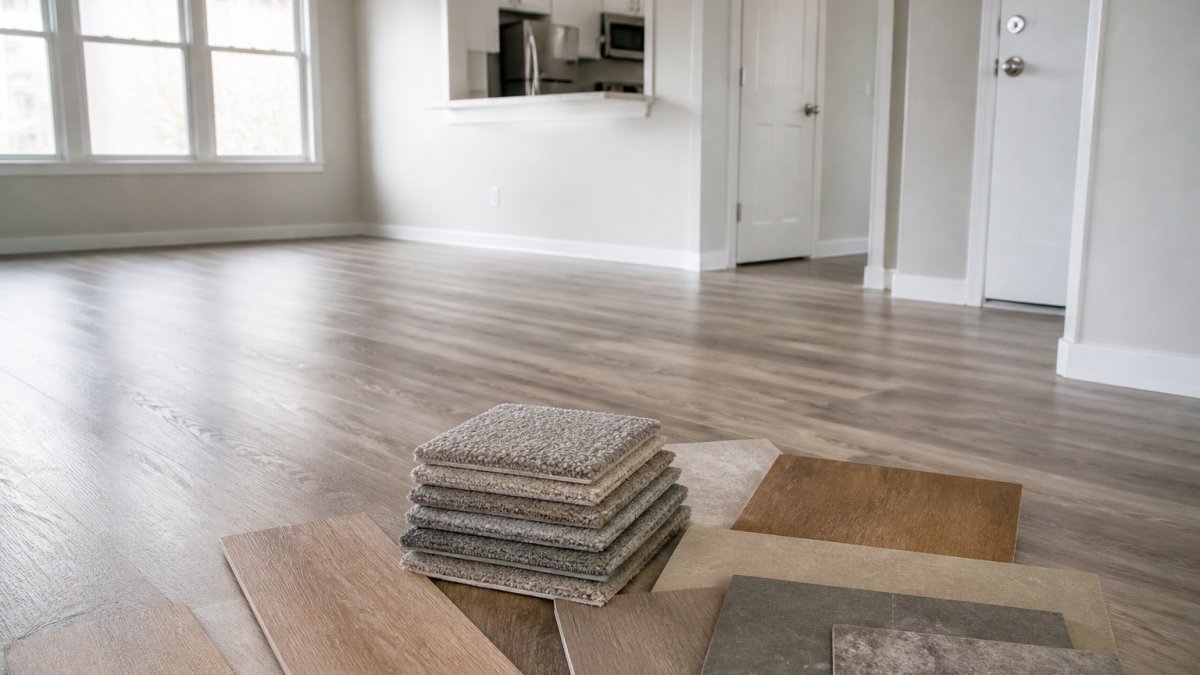
| Carpet tile | Medium | Offices, quiet zones | Stains in wet areas |
| Polished concrete | Very high | Warehouses, showrooms | Hard on feet, slippery when wet |
For a deeper material comparison, see what is the most durable flooring for active families, which breaks down the same trade-offs for busy households.
Matching the Floor to Your Business Type
The most useful filter is not the material name but the way your space is used. A few common small-business patterns:
- Independent retail: LVT or vinyl plank in the sales floor, sheet vinyl or rubber at the entry and stockroom. Retail floors take rolling loads from carts and fixtures, so a thicker wear layer pays for itself.
- Cafés and quick-service food: sheet vinyl or rubber in the prep and dish areas for water resistance and grip, with LVT in the seating zone. Seams in wet zones must be sealed.
- Salons and barbershops: LVT or vinyl tile that resists hair color, water and dropped tools, with a matte texture to hide clippings and reduce slip risk.
- Offices and professional suites: carpet tile in workstations and meeting rooms for acoustics, resilient vinyl in entries, break rooms and restrooms.
- Small gyms and studios: rubber in the workout zone, vinyl in the lobby and locker area.
A mixed-material plan usually beats a single surface across the whole space. You pay rubber or carpet prices only where those materials earn their keep, and use resilient vinyl everywhere else.
Total Cost of Ownership, Not Sticker Price
Upfront price is the easiest number to compare and the least useful. Total cost of ownership adds installation, routine maintenance, repairs and replacement over the years the floor stays in service. The ranking can shift once maintenance and replacement are factored in:
- Purchase and installation: vinyl and carpet tile generally sit at the lower end per square foot; rubber and polished concrete sit higher because of material cost and subfloor work.
- Routine maintenance: vinyl and rubber wipe clean with routine mopping; carpet tile needs regular vacuuming and periodic deep cleaning; polished concrete needs resealing. Cleaning labor, not supplies, is usually the largest recurring line.
- Repair: modular formats (LVT, vinyl tile, carpet tile) let you swap a damaged piece instead of replacing a room. Sheet vinyl and poured surfaces are harder to patch invisibly.
- Replacement timing: a thin wear layer that scuffs early can erase the savings from a lower purchase price. A thicker wear layer usually costs more upfront and less per year of service.
A practical way to compare two quotes is to divide total cost (materials, installation, expected maintenance and one replacement cycle) by the years you expect the floor to last. That per-year figure is the number to defend to an owner or a lender.
Durability Ratings and Pros and Cons by Material
Luxury vinyl tile and plank earn a high rating for scratch and stain resistance.
Rubber flooring rates very high for impact and moisture resistance, which is why it dominates gyms and commercial kitchens.
Carpet tile rates medium. It absorbs sound and hides traffic patterns, but stains in food-service or entry areas.
Polished concrete rates very high for longevity but needs sealing and cushioning to stay comfortable and safe.
Heavy Duty Commercial Vinyl Flooring: LVT, Plank, Tile and Sheet
Heavy duty commercial vinyl flooring is the workhorse of small-business interiors, and for good reason: it delivers commercial-grade performance at a price most owners can absorb.
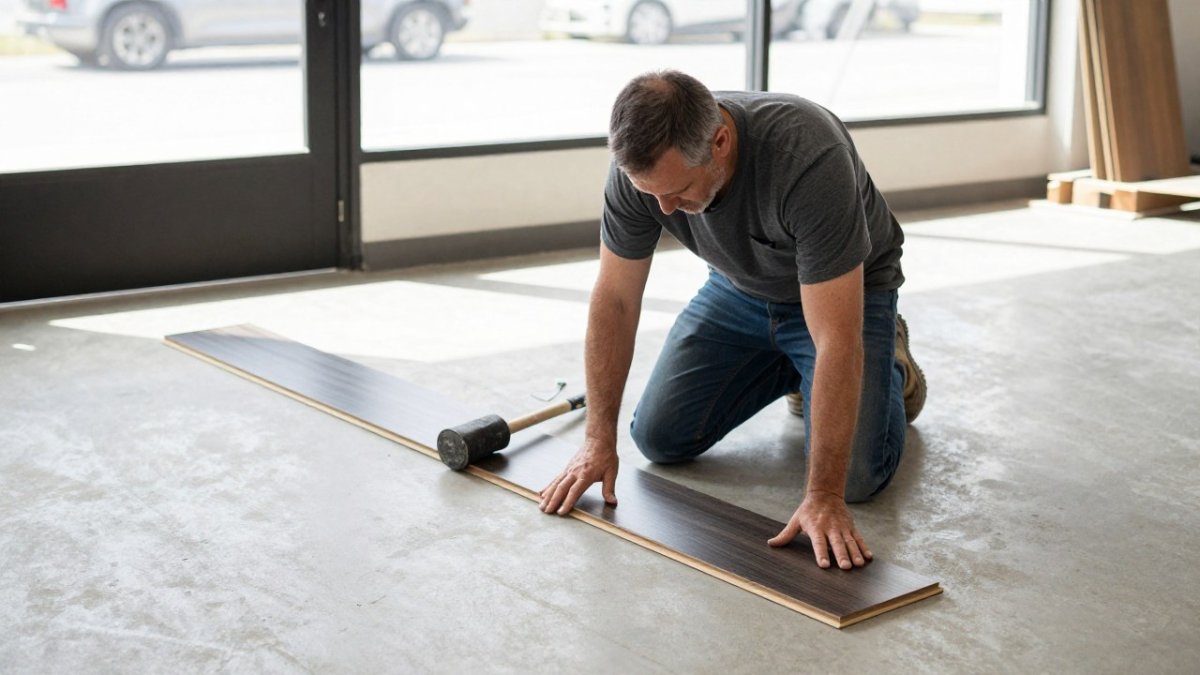
- Luxury vinyl tile (LVT): realistic stone and wood looks, click-lock or adhesive installation
- Vinyl plank: long boards that mimic hardwood, popular in retail and offices
- Vinyl tile: square format, easy to replace individual tiles after damage
- Sheet vinyl: seamless surface, the best water resistance for kitchens and restrooms
Wear layer thickness is the spec that decides longevity. A thicker wear layer resists scratches and stains longer under foot traffic.
For high-traffic zones specifically, our breakdown of the best flooring for high traffic areas that holds up shows which materials survive constant use.
Rubber Commercial Flooring for Gyms, Kitchens and Back-of-House Areas
Rubber commercial flooring is the right call when impact, moisture and safety drive the decision.
Rubber generally costs more per square foot than vinyl, comes in a narrower palette, and needs a flat, clean subfloor to sit correctly. In a kitchen, seams must be sealed to keep water out.
For a small fitness studio or café, rubber in the workout or prep zone paired with vinyl in the lobby is a common, cost-smart mix.
Commercial Office Flooring: Balancing Acoustics, Comfort and Appearance
Commercial office flooring has to do more than survive foot traffic: it has to keep the space quiet, comfortable and presentable. That changes the ranking.
Carpet tile wins on acoustics and comfort underfoot, cutting the echo of hard surfaces and reducing fatigue at standing desks.
A practical approach many offices take: carpet tile in workstations and meeting rooms, resilient vinyl in entries, break rooms and restrooms.
Color and texture matter more than owners expect.
Subfloor Prep, Installation and Repair Without Closing Your Doors
Subfloor preparation decides whether a durable floor actually performs.
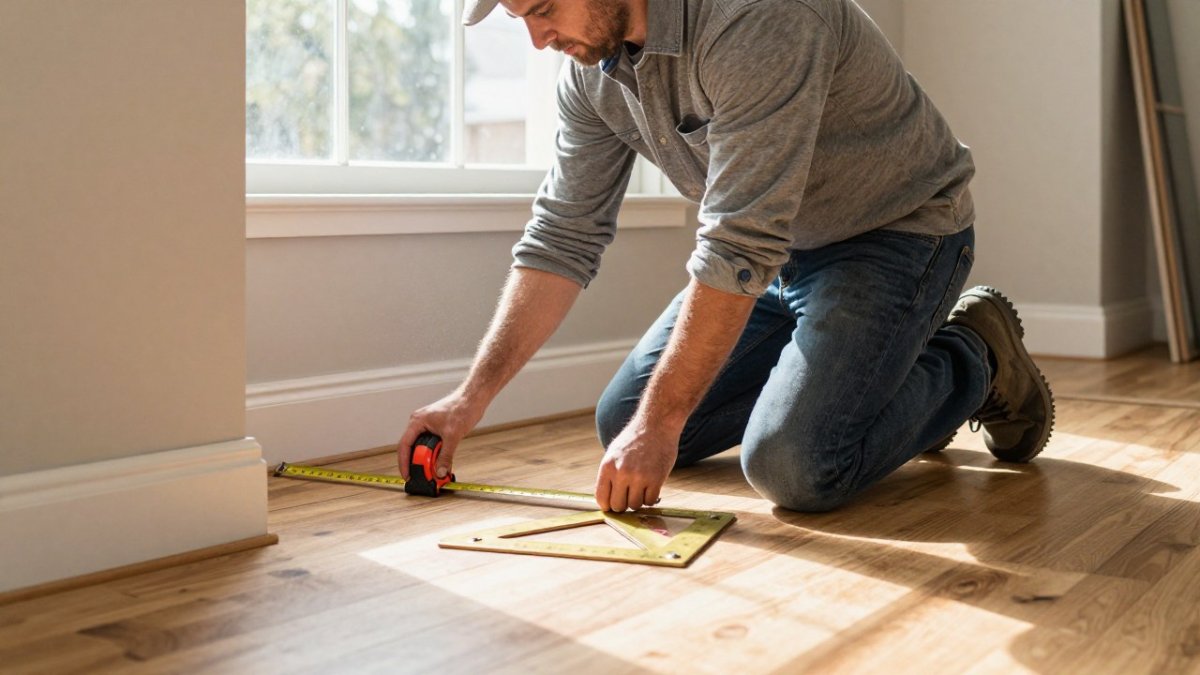
A proper assessment checks moisture levels, flatness and existing floor condition before anything is installed.
Scheduling matters just as much for a business that cannot afford dark days.
If you are weighing whether to hire out, our guide on why professional flooring installation is worth it covers the disruption and rework risks of a rushed DIY job.
Maintenance, Lifecycle Cost and Building Code Requirements
Total cost of ownership, not sticker price, is the number that should drive the decision. Lifecycle cost adds maintenance, cleaning supplies, repairs and replacement years into the math.
Maintenance by Material
Maintenance needs vary by material, and the labor behind them usually costs more than the supplies:
- Vinyl and rubber: routine mopping with a neutral cleaner; periodic scrub and recoat if the surface is finished. Spills wipe up without staining when addressed promptly.
- Carpet tile: regular vacuuming, spot treatment, and periodic deep cleaning. In entry zones, a walk-off mat system reduces soil tracked onto the carpet.
- Polished concrete: dust mopping and periodic resealing; unsealed concrete stains and dusts.
- Sheet vinyl: damp mopping and seam inspection; a failed seam lets water under the surface.
Matching the cleaning routine to the material protects the investment.
Lifecycle Cost in Practice
A simple lifecycle comparison looks at four lines: purchase, installation, annual maintenance and one replacement cycle. The floor with the lowest purchase price is not always the lowest per-year cost once cleaning labor and replacement timing are included. Two habits make the math honest:
- Track cleaning labor separately from supplies, because labor is the larger recurring cost in most small businesses.
- Estimate replacement timing by traffic zone, not for the whole space. Entries and kitchens wear out years before offices and stockrooms.
Safety, Accessibility and Code Requirements
Safety and code requirements apply to every commercial space, and they are easier to meet when planned before ordering:
- Slip resistance: entries, kitchens and restrooms need textured or matte surfaces, and wet zones benefit from drainage or mat systems. Confirm the slip rating on the product data sheet rather than relying on appearance.
- Accessibility: the ADA Standards for Accessible Design govern transitions, accessible routes and changes in level. A flooring change that creates a lip at a doorway can turn an accessible route into a barrier.
- Fire and building codes: corridors and exits can carry material and flame-spread requirements, so confirm with the local authority having jurisdiction before ordering.
- Transitions and trim: reducer strips and transition profiles should match the height difference between materials and stay within accessible limits.
To build a realistic budget, use this step-by-step guide to estimating flooring project costs, which walks through measuring, material and labor line items.
Getting a Free In-Home or On-Site Flooring Estimate
An on-site estimate lets you see flooring in the actual conditions of your space.
Floor Coverings International of Myrtle Beach offers premium flooring and carpet options and focuses on delivering exceptional service.
If you are deciding between an in-person visit and a showroom trip, our article on why in-home flooring consultations beat showroom visits explains the difference.
Choosing durable commercial flooring for a small business means balancing traffic, moisture, maintenance and total cost, not just the price per square foot.
Frequently Asked Questions
What is the most durable flooring for a small business?
It depends on the traffic and the room. Heavy duty commercial vinyl flooring, including LVT and sheet vinyl with a thick wear layer, handles the widest range of retail and office conditions and resists water well. Polished concrete lasts longest where moisture and heavy loads dominate. Rubber commercial flooring wins in gyms and kitchens. Match the material to the room instead of picking one floor for the whole building.
Is commercial vinyl flooring a good choice for small businesses?
Yes, for most small businesses it is the practical default. Commercial-grade vinyl resists scratches, stains and spills, cleans with a mop, and comes in click-lock or adhesive installation so you can replace a damaged section instead of the whole floor. The wear layer is the number that matters: a thicker layer lasts longer under foot traffic. Ask for the wear layer thickness in millimeters before you compare quotes.
What is the difference between commercial LVT and sheet vinyl?
LVT comes as planks or tiles, usually with a click-lock or glue-down system, and it is easy to repair because you swap individual pieces. Sheet vinyl is one continuous roll, so it has fewer seams and better water resistance in kitchens and restrooms. LVT gives a more realistic wood or stone look and faster repairs. Sheet vinyl gives fewer seams and quicker cleaning across large open areas.
Is rubber flooring suitable for commercial spaces?
Rubber commercial flooring suits gyms, kitchens, clinics and back-of-house corridors. It absorbs sound, cushions standing workers, and grips well when wet, which helps with slip resistance. It costs more per square foot than basic vinyl and has a smaller color range. Use it where comfort and safety matter most, and vinyl in customer-facing retail areas.
How much maintenance does commercial flooring require?
Vinyl and rubber need daily sweeping or dust mopping and regular damp mopping with a neutral cleaner. Carpet tile needs vacuuming several times a week and periodic deep cleaning. Polished concrete needs dust mopping and occasional re-sealing. Ask about the manufacturer's cleaning schedule before you buy.
What should a small business consider before replacing its flooring?
Check the subfloor first: moisture readings, flatness and any cracks decide which materials will actually hold up. Then weigh total cost of ownership, not just the sticker price, including installation downtime, cleaning supplies and how easily a damaged section can be repaired. Confirm slip resistance and accessibility requirements for your space, and schedule the work in phases so you can stay open.