 blog
How to Choose Flooring for Myrtle Beach Rentals
Last Updated: November 1, 2026
Quick Summary
Luxury vinyl plank is the default choice for myrtle beach rentals, combining a waterproof core, a scratch-resistant wear layer, and low maintenance for fast guest turnovers. Use porcelain tile in wet areas and entries, and keep carpet tile or engineered hardwood for bedrooms and low-traffic living areas.
- Sand, humidity, and salt air eliminate solid hardwood and standard laminate from the coastal shortlist.
- Ask for wear layer thickness in millimeters and warranty terms in writing before comparing quotes.
- Build annualized cost from installed cost, cleaning labor per turn, repair frequency, and downtime.
- Choose matte, textured tile in bathrooms and entries rather than polished surfaces that get slippery.
- Use absorbent mats at every exterior door and transition strips at material changes to prevent trips.
Table of Contents
- Best Flooring for Vacation Rentals in a Coastal Climate
- Luxury Vinyl Plank for Rental Properties: The Default Choice
- Easy-to-Clean Flooring for Vacation Rentals Between Guest Turnovers
- Rental Property Flooring Cost: What You Pay Upfront vs Over Time
- Room-by-Room Picks for a Beach Rental
- Slip Resistance and Guest Safety Near Wet Feet and Sand
- Booking Your In-Home Flooring Consultation
- Frequently Asked Questions
Best Flooring for Vacation Rentals in a Coastal Climate
Choosing the best flooring for Myrtle Beach rentals starts with one hard truth: this is not an inland flooring decision. Sand, humidity, salt air, and constant guest turnover eliminate half the materials that work fine elsewhere. Floors that look flawless in a showroom can fail quickly when they meet coastal conditions.
Below, we break down which materials survive here, what they cost over their full life, and which rooms deserve which surface.
Why Sand, Humidity and Salt Air Change the Shortlist
Three forces do the damage. Sand acts like sandpaper under every footstep, dulling finishes and scratching wear layers. Humidity pushes moisture into seams and subfloors, which is why buckling is the most common coastal flooring complaint. Salt air adds a corrosive film that settles into grout lines and textured surfaces.
The practical result: solid hardwood and standard laminate drop off the shortlist fast. Materials with sealed cores and moisture resistance move to the top. For a deeper look at how humidity affects each material, see our guide to flooring for humid coastal homes, and if buckling is already a concern, these steps to prevent flooring buckling in humidity are worth reading before you buy anything.
Luxury Vinyl Plank for Rental Properties: The Default Choice
Luxury vinyl plank is a popular choice for rental flooring in coastal markets. LVP and luxury vinyl tile (LVT) combine a waterproof core, a printed wear layer that resists scratching, and installation methods that tolerate minor moisture movement in the subfloor.
The wear layer thickness is worth asking about before you commit.
If you are leaning toward vinyl, check what LVP installation costs before you set a budget. For a wider comparison of rental-specific materials, our guide to choosing flooring for rental properties covers the trade-offs in more detail.
Easy-to-Clean Flooring for Vacation Rentals Between Guest Turnovers
Turnover speed affects how quickly a rental can be readied between guests. This is why easy-to-clean flooring for vacation rentals usually means large-format tile or LVP with tight seams and no deep texture.
Three cleaning realities to plan for:
- Sand collects at doorways and under furniture, so smooth surfaces with a mat system win.
- Wet feet track moisture from pool and beach, so waterproof cores matter more than stain coatings.
- Sticky spills and sunscreen respond better to sealed surfaces than to porous stone.
Avoid heavily textured tile in entryways. It traps sand, and your cleaning crew will hate it.
Rental Property Flooring Cost: What You Pay Upfront vs Over Time
Rental property flooring cost is more than the sticker price. Cleaning, repairs, and the revenue lost while a unit is out of service during replacement all factor into the total cost of ownership.
Owners often compare materials on installed cost per square foot, but total cost of ownership also includes service life, repairs, and cleaning effort.
What Drives the Installed Price
Pricing depends on material, project scope, and site conditions, so quotes are provided for each project individually. Direct your questions about current prices to the Floor Coverings International of Myrtle Beach website or request a quote.
Relative Cost and Life Expectancy by Material
| Material | Relative Upfront Cost | Water Resistance | Expected Life in a Rental | Maintenance Burden | Best Use |
|---|---|---|---|---|---|
| Luxury vinyl plank | Moderate | High | Long | Low | Whole-unit default |
| Porcelain tile | Moderate to high | High | Very long | Low | Wet areas, entries |
| Laminate | Low | Low to moderate | Short to moderate | Moderate | Bedrooms only |
| Engineered hardwood | High | Moderate | Moderate | Moderate | Low-traffic living areas |
| Carpet tile | Low | Low | Short | High | Bedrooms, stairs |
| Polished concrete | Moderate | High | Very long | Low | Utility, outdoor-adjacent |
The Total Cost of Ownership Model
Build a simple annualized cost for each candidate material using four inputs:
- Installed cost, material plus labor plus removal and disposal of the old floor.
- Cleaning labor per turn, smooth, tight-seam surfaces mop in minutes; grout lines, plush carpet, and deep texture add time on every clean.
- Repair frequency, scratched planks, chipped tile, stained carpet, and dented vinyl each carry a replacement cost and a scheduling cost.
- Downtime, days the unit cannot be booked during repair or replacement, multiplied by your average nightly rate.
Where Owners Overspend and Underspend
If you are weighing vinyl specifically, check what LVP installation costs before you set a budget. For a wider comparison of rental-specific materials, our guide to choosing flooring for rental properties covers the trade-offs in more detail.
Room-by-Room Picks for a Beach Rental
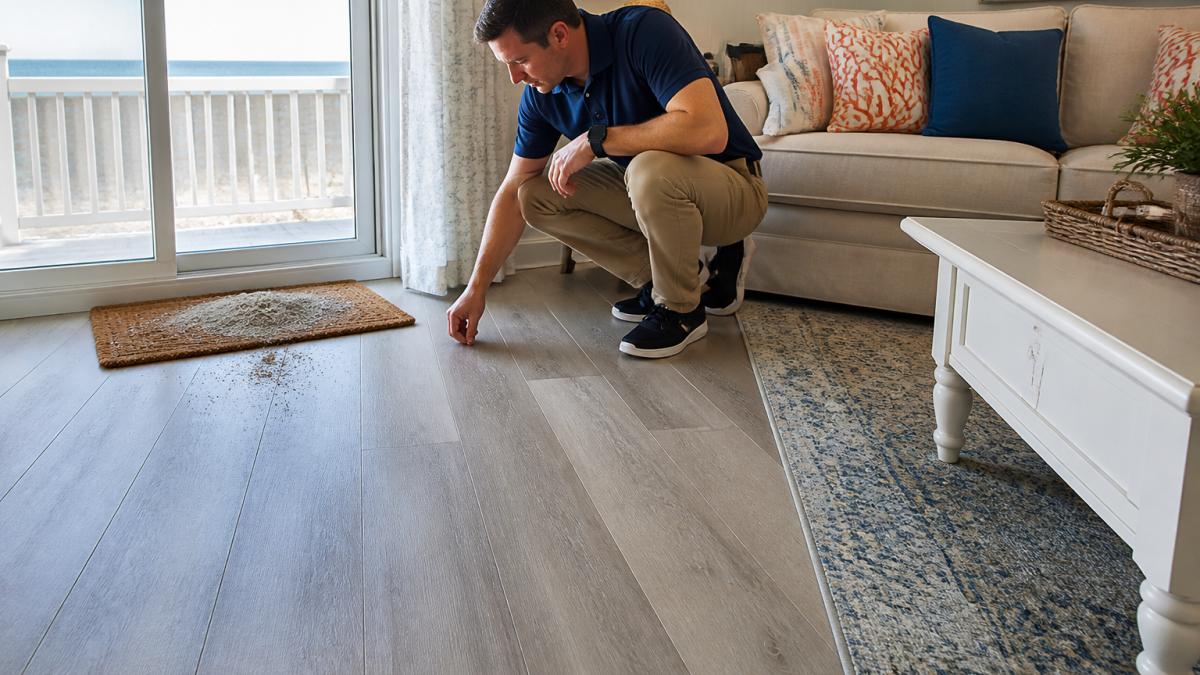
No single material wins every room. Match the surface to the moisture load and the traffic pattern, and you get a floor plan that lasts. The room-by-room plan below is built around the two forces that define a coastal rental: wet feet moving from beach and pool into the unit, and cleaning crews working against a tight turnover clock.
Entryways and Transition Zones
Entries take the first hit from sand, grit, and water. Choose surfaces that are easy to clean and keep grout lines narrow at exterior doors. Use absorbent mats outside and inside every exterior door, and use transition strips at material changes so guests do not catch a toe. If the entry adjoins a bathroom or pool area, choose a matte, textured tile rather than a polished surface.
Kitchens
Kitchens combine dropped weight, standing water, and grease. Natural stone looks excellent but needs sealing and re-sealing, which adds maintenance cost a rental rarely justifies. Skip laminate and standard hardwood here entirely.
Bathrooms
Bathrooms are the highest-risk room for both water damage and slips. Porcelain or ceramic tile with a matte, textured finish is the default. Keep grout lines shallow in wet zones to reduce standing water, and seal grout to slow staining. Polished large-format tile can become slippery when wet, so matte or textured finishes are often a safer choice in bathrooms. If you want the look of stone without the sealing burden, choose a porcelain tile that mimics it.
Laundry Areas
Laundry rooms see intermittent water, lint, and appliance vibration. LVT or porcelain both work; skip laminate entirely here. Check that the flooring can handle a minor supply-line leak without swelling, and leave expansion gaps at the walls so the floor can move with humidity changes.
Living Areas
Living areas take the heaviest foot traffic and the most tracked sand, so LVP is our default pick. A waterproof core and a thicker wear layer matter more here than in any other room because this is where luggage, furniture, and bare feet meet the floor most often. If the unit is positioned as a premium listing, engineered hardwood can work in a low-traffic living area, but keep it away from exterior doors and wet zones.
Bedrooms
Bedrooms see less moisture, which opens the door to carpet tile for comfort and sound control, or engineered hardwood if the unit is positioned as a premium listing. Standard laminate can work in a dry bedroom, but keep it away from exterior doors and bathrooms.
Stairs and Hallways
Stairs and hallways concentrate traffic and are where slip risk and wear show up first. Carpet tile or a textured LVP with a matte finish works well; avoid polished surfaces and loose rugs on stairs. Use transition strips and secure nosings so guests do not catch a toe, and inspect stair edges between turns, that is where wear and lifting usually appear first.
Slip Resistance and Guest Safety Near Wet Feet and Sand
Guest safety is an important consideration with flooring near pools and bathrooms, where wet surfaces can be slippery.
Practical safeguards:
- Choose tile with a textured, matte finish in bathrooms and entries rather than polished surfaces.
- Place absorbent mats at every exterior door and at the top of stairs.
- Use transition strips at material changes so guests do not catch a toe.
- Keep grout lines shallow in wet zones to reduce standing water.
Polished large-format tile in a pool-adjacent bathroom can be slippery when wet.
Booking Your In-Home Flooring Consultation
Samples can look different under showroom lighting than in a home with natural light. An in-home consultation lets you view options against your actual walls and in your actual light.
Premium flooring and carpet options are available, and recommendations can be tailored to your property.
Ready to see how the options look in your unit? Explore our flooring solutions and request a consultation.
Frequently Asked Questions
What is the most durable flooring for a rental property?
Floor coverings suited to rental use include a range of materials, and durability depends on the specific product and the conditions of the property.
Is luxury vinyl plank a good choice for vacation rentals?
Luxury vinyl plank is one option for rental properties. Ask about wear layer ratings and subfloor preparation when comparing products.
How much does rental property flooring cost, and how do I compare materials fairly?
Rental property flooring cost depends on material, square footage, subfloor condition and removal of the old floor, so get an itemized quote rather than a single number. Consider total cost of ownership rather than sticker price alone. Ask for the wear layer rating, warranty terms, and expected replacement timeline for each option before deciding.
What flooring holds up best to sand and moisture in a beach rental?
Sand and moisture are common concerns in coastal rentals, and cleaning and surface choice affect how well a floor handles them. Place washable mats at every entry, and pick a floor with a textured surface so wet feet do not slip on smooth planks.
Your rental's floors take more abuse in one season than most homes see in five years. Get the material and the installation right the first time, and you skip the replacement cycle entirely. Floor Coverings International of Myrtle Beach offers a wide range of premium flooring and carpet options, in-home design consultations, and installation tailored to coastal conditions. Get started with Floor Coverings International of Myrtle Beach and get a free estimate for your rental property.