 Comparison
Carpet King and Flooring Alternatives: A Buyer's Guide
Last Updated: November 22, 2026
Quick Summary
Carpet wins in bedrooms for comfort and sound, while hard surfaces win in kitchens, baths, and entryways for water resistance. When weighing flooring alternatives against carpet, match each material's durability, moisture tolerance, and maintenance needs to how the room is actually used. Get that match right and the floor lasts; get it wrong and you replace it early.
- Nylon is the most durable common carpet fiber, holding up best to traffic and crushing.
- Luxury vinyl plank is waterproof and works in kitchens, baths, and laundry rooms.
- Carpet padding is not the place to cut corners; better padding extends carpet life.
- Verify the legal business name, physical address, and state contractor license number before comparing quotes.
- Households with pets should favor stain-resistant nylon or waterproof LVP.
Table of Contents
- Material Selection: Matching Flooring to Each Room
- Alternatives to Carpet Flooring for Coastal Homes
- Cheap Carpet and Flooring Alternatives That Still Last
- Flooring Contractor Comparison: What to Check Before You Hire
- Flooring Installation Questions to Ask Every Installer
- Room-by-Room Recommendations for Your Household
- Get a Free In-Home Flooring Estimate
- Frequently Asked Questions
Material Selection: Matching Flooring to Each Room
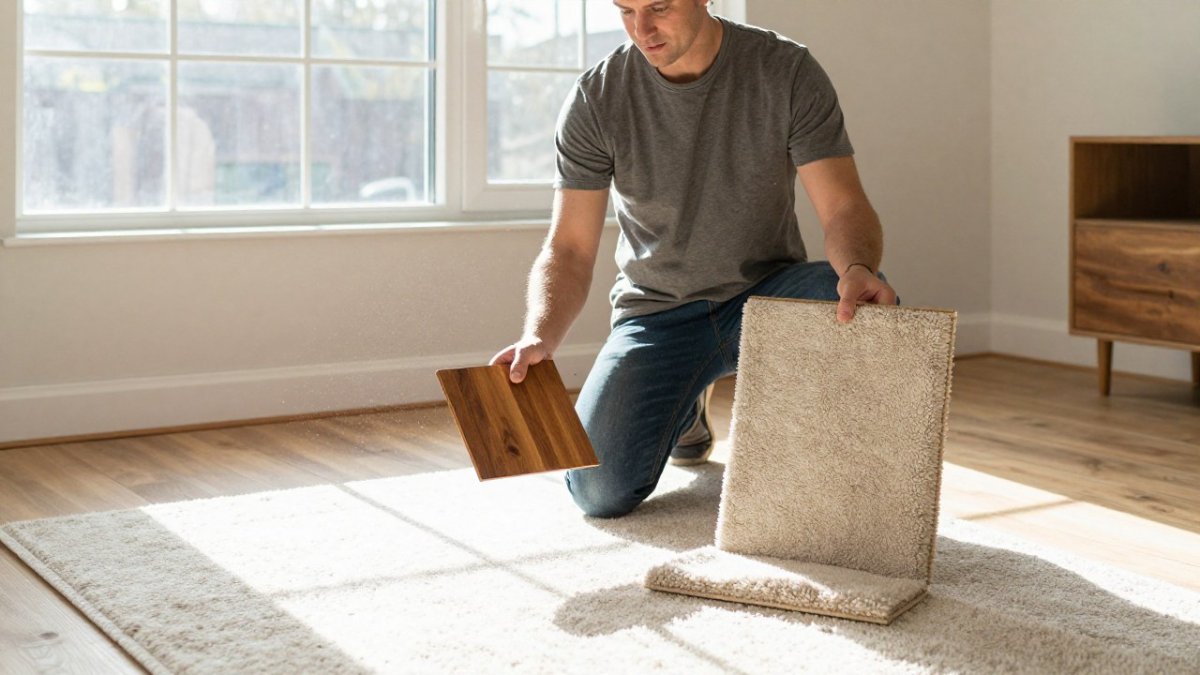
The U.S. floor-covering retailing industry is estimated at $62.4 billion in 2026, according to IBISWorld's floor covering retailing industry analysis, and much of that spend comes down to one decision: which material goes in which room. Homeowners often weigh flooring alternatives against carpet. The short answer: carpet wins in bedrooms for comfort and sound, hard surfaces win in kitchens, baths, and entryways for water resistance.
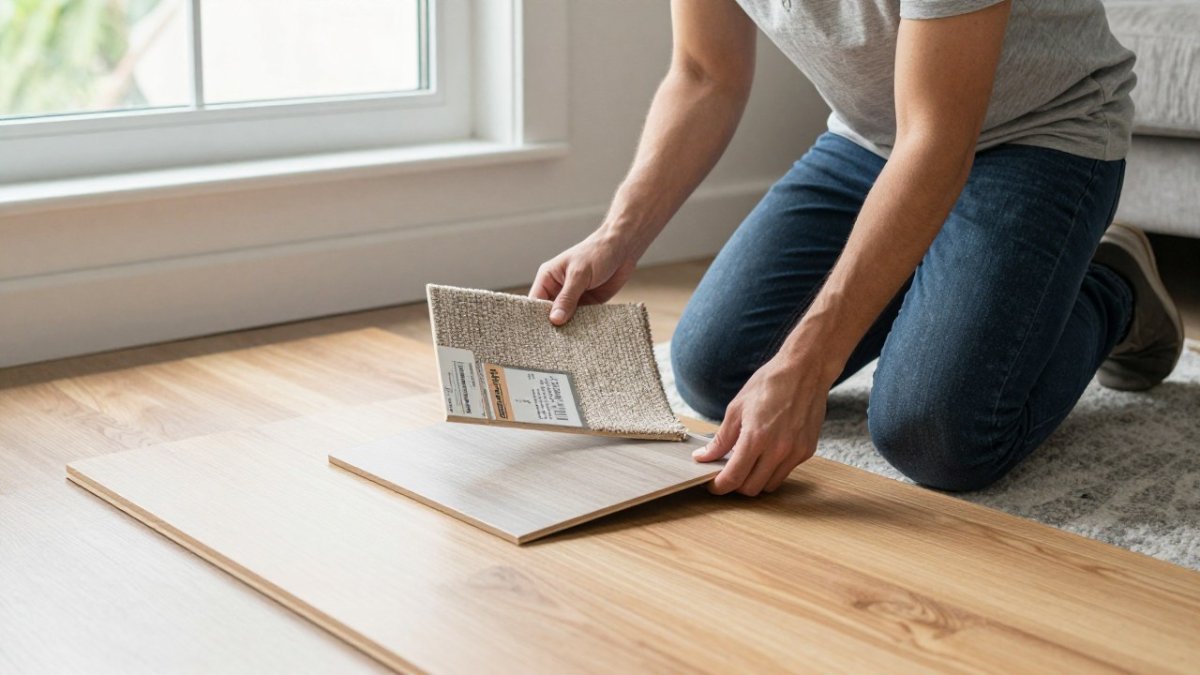
Material selection is the process of matching a floor's durability, moisture tolerance, and maintenance needs to how each room is actually used. Get that match right and the floor lasts; get it wrong and you replace it early.
Carpet Fibers: Nylon, Polyester, and Natural Wool
Nylon is the most durable common carpet fiber, holding up best to traffic and crushing. Polyester resists stains well and costs less, but it matts faster in busy rooms. Natural wool offers comfort and longevity at the highest price. For homes with pets, nylon in a tight twist is usually the safer bet. If traffic is your main concern, our guide to durable carpet options for high traffic areas goes deeper.
Hardwood, Engineered Wood, and Bamboo
Solid hardwood can be sanded and refinished multiple times. Engineered wood handles humidity swings better because its plywood core resists expansion. Bamboo is a fast-renewing grass that behaves like hardwood but dents more easily under heavy furniture.
Luxury Vinyl Plank, Laminate, and Tile
Luxury vinyl plank (LVP) is waterproof and works in kitchens, baths, and laundry rooms. Laminate costs less but swells if water reaches its core. Ceramic and porcelain tile are the most water-resistant options and suit bathrooms and entryways. Before committing to LVP, check what installation costs involve.
Alternatives to Carpet Flooring for Coastal Homes
Humidity is the deciding factor in coastal homes. Salt air and moisture push many homeowners toward hard surfaces, and for good reason: LVP, porcelain tile, and engineered wood handle damp conditions far better than wall-to-wall carpet. A Dovetail Partners life-cycle comparison of flooring alternatives makes the broader point that no single material is universally best. Climate should drive the choice.
If you are weighing coastal options, our flooring guide for humid coastal homes covers moisture and salt-air considerations in detail.
Cheap Carpet and Flooring Alternatives That Still Last
Budget floors fail for one reason: the wrong material in the wrong room. Cheap carpet and flooring alternatives can still last when you match them to low-traffic spaces and skip the bargain-bin padding. Carpet padding is not the place to cut corners; better padding extends carpet life and improves comfort underfoot. The Carpet and Rug Institute's research resources examine how cleaning and maintenance affect flooring performance over time. Spend on padding and installation, save on the carpet itself.
Flooring Contractor Comparison: What to Check Before You Hire
A flooring contractor comparison should check five things, not four: licensing and insurance, installation method, warranty terms, who handles floor preparation and old-floor removal, and who owns the post-installation callback. Most homeowners stop at price, which is the least reliable comparison point because two bids that look similar on the surface often cover different scopes.
Start by confirming the entity you are comparing. "Carpet King and Flooring" is not a single national chain; the name is used by independent retailers in different markets, and search results mix those businesses with unrelated flooring pages. Before you compare quotes, verify the legal business name, the physical address, and the state contractor license number on your state's licensing board lookup. A quote from a similarly named but different business is not a valid comparison.
Licensing and insurance. Ask for the license number and a certificate of insurance showing both general liability and workers' compensation. If a crew member is injured on your property and the installer carries no workers' comp, the exposure can land on you. Verify the certificate by calling the insurer, not by trusting a photocopy.
Installation method and scope. Two bids for the same square footage can differ because one includes tear-out, haul-away, subfloor leveling, and baseboard reinstallation and the other does not. Ask each contractor to itemize: removal and disposal, floor preparation and self-leveling, underlayment or padding, material, labor, transitions and trim, and cleanup. A bid that lists one lump sum is harder to compare and easier to inflate later.
Warranty terms. Separate the manufacturer's product warranty from the installer's workmanship warranty. Product warranties typically cover defects in the material, not installation errors, and many require professional installation to stay valid. Workmanship warranties vary widely in length and in what they exclude, ask who honors the warranty if the original installer goes out of business, and get the answer in writing.
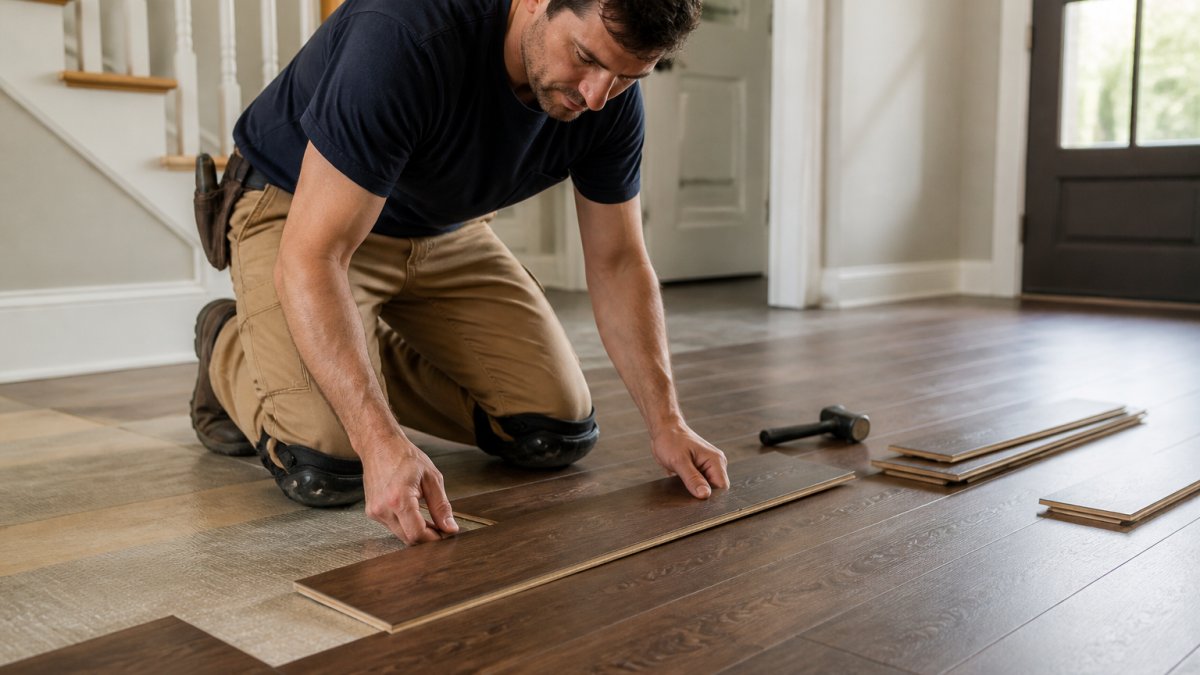
Floor preparation and removal. Floor preparation matters most. A perfectly good material installed over an uneven subfloor will fail. Ask each contractor who pulls up the old floor, how they test for moisture in concrete slabs, and how they level the surface. A contractor who cannot describe the moisture test in specific terms is guessing.
Post-installation support. Ask what happens if a seam opens, a plank lifts, or a tile cracks after the job. Callback terms vary by installer. Confirm the callback process, the response time, and whether the same crew returns.
Weighing a local installer against a big-box store? Our breakdown of flooring contractor versus big box store compares the two directly, including how their installation subcontracting models differ.
Flooring Installation Questions to Ask Every Installer
Most installation-question lists stop at "ask about the warranty." The useful version is a decision framework: ask every bidder the same questions, write the answers into a comparison sheet, and use the differences to choose. Here is the framework we recommend, organized by what each answer actually tells you.
Scope and measurement. Ask: How did you measure the job, and will the written estimate list square footage room by room? A contractor who measures on the back of a business card and quotes a round number is more likely to hit you with a change order. Ask whether the estimate includes a waste factor, typically a percentage above the measured area to account for cuts and pattern matching, and what happens if the material runs short.
Removal and preparation. Ask: Who moves furniture, who removes and hauls away the old flooring, and who repairs or levels the subfloor? Get the disposal fee itemized. Ask how the installer checks for moisture in a concrete slab and what they do if the reading is high. These answers separate organized installers from the ones that discover problems after the old floor is gone.
Transitions and trim. Ask: How will you handle transitions between rooms and between different materials, and will you remove and reinstall baseboards or install quarter round? Transition strips and trim are small line items that add up, and the answer tells you whether the bid is complete.
Timeline and payment. Ask: How long will the job take, what is the payment schedule, and how much is due before materials arrive? A common pattern is a deposit at contract signing, a progress payment, and the balance on completion; be cautious with any request to pay the full amount up front. Ask what the schedule looks like if material is backordered.
Warranty and callbacks. Ask: What does the warranty cover, who honors it, and what is the callback window for workmanship issues? Confirm whether the manufacturer's warranty requires professional installation and whether the installer is on the manufacturer's approved list.
Contingencies. Ask: What happens if the subfloor needs repair, if asbestos or old adhesive is found, or if the material arrives damaged? Get the change-order process in writing, including who approves additional work and how the price is set.
Watch out: an installer who will not put the scope, payment schedule, and change-order process in writing is the one most likely to create disputes later. The answers separate organized installers from the ones that disappear mid-job, and the comparison sheet is what lets you see the difference before you sign.
Room-by-Room Recommendations for Your Household
Match the material to the room and the household, not the showroom. Here is how we would break it down:
| Room | Best Material | Why |
|---|---|---|
| Bedrooms | Nylon carpet | Comfort, sound control |
| Kitchen | Luxury vinyl plank | Waterproof, easy to clean |
| Bathrooms | Porcelain tile | Highest water resistance |
| Living room | Engineered wood | Warmth plus humidity tolerance |
| Entryway | Tile or LVP | Handles traffic and moisture |
| Basement | LVP or tile | Moisture-tolerant |
Households with pets should favor stain-resistant nylon or waterproof LVP. Households with kids lean toward easy-clean hard surfaces in shared spaces.
Get a Free In-Home Flooring Estimate
Samples look different under your own lighting, and that is exactly why an in-home estimate beats a showroom visit. We bring samples to your rooms and recommend materials based on how you live. See why in-home consultations beat showroom visits, then book a free estimate with Floor Coverings International of Myrtle Beach. We offer flooring and carpet options, and our team tailors recommendations to your space. Get started with Floor Coverings International of Myrtle Beach and choose flooring that fits your home and your climate.
Choosing flooring means balancing moisture, traffic, and budget, and coastal homes make that balance harder. Floor Coverings International of Myrtle Beach brings premium carpet and flooring options to your door, with in-home consultations and personalized recommendations. Get started with Floor Coverings International of Myrtle Beach and find the right floor for every room.
Frequently Asked Questions
What are the most regretted flooring choices?
The most common regrets are choosing a material that does not match the room's moisture and traffic, and skipping professional floor preparation. Carpet in a humid bathroom or low-cost laminate in a beach house tends to buckle or warp. Homeowners also regret choosing on price alone without comparing warranties or installation standards. A flooring contractor comparison that covers prep work, warranty terms, and material suitability prevents most of these problems.
What are some good alternatives to carpet flooring?
Luxury vinyl plank and tile, engineered wood, laminate, ceramic and porcelain tile, and natural stone all work as alternatives to carpet flooring. For coastal homes, luxury vinyl plank and porcelain tile resist humidity and salt air better than solid hardwood. Engineered wood offers a real-wood look with more stability. Each option changes the room's comfort, maintenance, and installation cost, so compare them by room rather than picking one material for the whole house.
What should you ask before hiring a flooring installer?
Ask about floor preparation, warranty coverage, insurance, and who handles subfloor repairs. Get written answers to your flooring installation questions: What is the timeline? Who moves furniture? What happens if a plank or tile fails? Ask for proof of licensing and insurance, and request references from similar projects. A contractor who answers these clearly and puts them in the estimate is safer than one who only quotes a square-foot price.
Which flooring options are easiest to maintain?
Luxury vinyl plank, porcelain tile, and laminate are the easiest to maintain. They need regular sweeping and damp mopping, and they resist stains and water better than carpet or solid hardwood. Carpet requires vacuuming and periodic deep cleaning, and natural wool needs gentler products. In coastal homes, easy-maintenance flooring also holds up better against humidity, which reduces long-term cleaning and replacement costs.