 Comparison
Carpet vs Hardwood: Pros and Cons for Your Home
Last Updated: November 10, 2026
Quick Summary
Carpet vs hardwood depends on comfort versus durability. Carpet is softer, warmer, quieter, and cheaper to install, while hardwood lasts far longer and is easier to keep clean. The right choice depends on the room and how your household uses it.
- Carpet costs roughly $600 to $2,200 for a 200-square-foot bedroom, versus $1,600 to $5,000 or more for hardwood.
- Carpet is often replaced every 5 to 15 years, while solid hardwood can last decades.
- Solid hardwood can last 50 to 100 years and can be refinished multiple times.
- Carpet is generally the more comfortable choice for bedrooms, while hardwood suits entryways and kitchens.
- Stairs get the most wear, so compare tread profiles and grip before choosing carpet or hardwood.
Table of Contents
- Carpet vs Hardwood: The Overall Comparison
- Carpet vs Hardwood Cost: Upfront and Long-Term
- Durability, Lifespan, and Maintenance
- Comfort, Warmth, and Noise Reduction
- Is Carpet or Hardwood Better for Bedrooms?
- Pros and Cons of Carpet vs Hardwood for Seniors
- Carpet vs Hardwood Stairs: What to Consider
- Choosing the Right Floor for Your Household and Next Step
- Frequently Asked Questions
Carpet vs Hardwood: The Overall Comparison
Choosing between carpet and hardwood usually comes down to comfort versus durability. Carpet is softer, warmer, and quieter underfoot, and it costs less to install. Hardwood lasts far longer and is easier to keep clean. Floor Coverings International of Myrtle Beach works with homeowners on both options, and we recommend weighing the two against how your household actually lives.
Neither material wins everywhere. Carpet One's side-by-side flooring guide covering comfort, cleaning, and durability lays out the trade-offs clearly, and the right answer often depends on the room.
Carpet pros: soft underfoot, warmer and quieter, lower upfront cost, and a cushion for falls.
Carpet cons: traps allergens and odors, stains more easily, and typically needs replacement sooner.
Hardwood pros: durable, easy to sweep and mop, refinishable, and well regarded by buyers.
Hardwood cons: higher upfront cost, louder and colder, and it can scratch and dent.
Carpet vs Hardwood Cost: Upfront and Long-Term
Carpet almost always costs less to install than hardwood. 2020 Flooring's carpet and hardwood guide with example bedroom cost ranges estimates roughly $600 to $2,200 for a 200-square-foot bedroom in carpet, compared with $1,600 to $5,000 or more for hardwood. Those figures are examples, not quotes, and your actual price depends on material grade, subfloor condition, and labor.
The long-term picture changes the math. Carpet is often replaced every 5 to 15 years, while solid hardwood can last decades and can be refinished several times. Flooring America's cost FAQ on the long-term value of hardwood makes the same point about hardwood's potential value over time. For a clear budget, add replacement cycles to the installation price rather than comparing sticker prices alone.
A like-for-like lifecycle comparison over a stated horizon, such as 20 years, includes installation, routine cleaning, professional deep cleaning for carpet, refinishing for hardwood, and replacement at the end of each material's service life. The exact outcome depends on material grade, hardwood species and finish, labor rates in your area, and how heavily the room is used.
Watch out: a lifecycle comparison that ignores professional deep cleaning for carpet or refinishing for hardwood will understate the true cost of whichever material you are leaning toward. Ask for the assumptions behind any quote, including the time horizon and the replacement or refinishing schedule, so you are comparing like with like.
Pricing depends on quantity, materials, and installation details, so contact Floor Coverings International of Myrtle Beach for a current quote.
Durability, Lifespan, and Maintenance
Hardwood is the durability winner. Solid hardwood can last 50 to 100 years and can be sanded and refinished multiple times. 2020 Flooring's durability and refinishing overview explains why that longevity makes hardwood a long-term investment. Carpet typically looks worn or stained within 5 to 10 years, depending on traffic.
Maintenance differs just as much. Carpet needs regular vacuuming and periodic professional deep cleaning to hold up. Hardwood needs sweeping and damp mopping, and scratches can often be repaired rather than replaced. Bona's homeowner guide on hardwood versus carpet maintenance and repairability covers both sides of this.
Where each material fails is worth understanding before you choose. Carpet wear typically shows first at traffic lanes and stair nosings, while hardwood can be damaged by water, grit, and furniture legs.
Maintenance needs also vary by household. Homes with pets often need more frequent carpet vacuuming and quicker stain treatment, while hardwood is generally easier to clean of dust and dander.
If you have busy traffic or pets, durable carpet options for high-traffic areas are worth comparing before you commit, since not every carpet holds up equally well.
The table below summarises how each material compares on lifespan and upkeep.
| Factor | Carpet | Hardwood |
|---|---|---|
| Typical lifespan | Looks worn within 5 to 10 years | Can last 50 to 100 years |
| Refinishing | Not applicable | Can be sanded and refinished multiple times |
| Routine care | Regular vacuuming | Sweeping and damp mopping |
| Professional care | Periodic deep cleaning | Scratch repair as needed |
| Wear shows first at | Traffic lanes and stair nosings | Scratches, water, and grit damage |
Comfort, Warmth, and Noise Reduction
Carpet wins on comfort. It feels softer underfoot, holds heat better, and absorbs sound, which is why it is popular in bedrooms and family rooms. Carpet One's comparison of carpet's warmth and sound-softening qualities highlights these advantages.
Hardwood reflects sound. Footsteps, chairs, and conversation carry more in a room with bare floors, so rugs help in open-plan spaces. Hardwood also feels cooler in winter unless the home has radiant heat.
Is Carpet or Hardwood Better for Bedrooms?
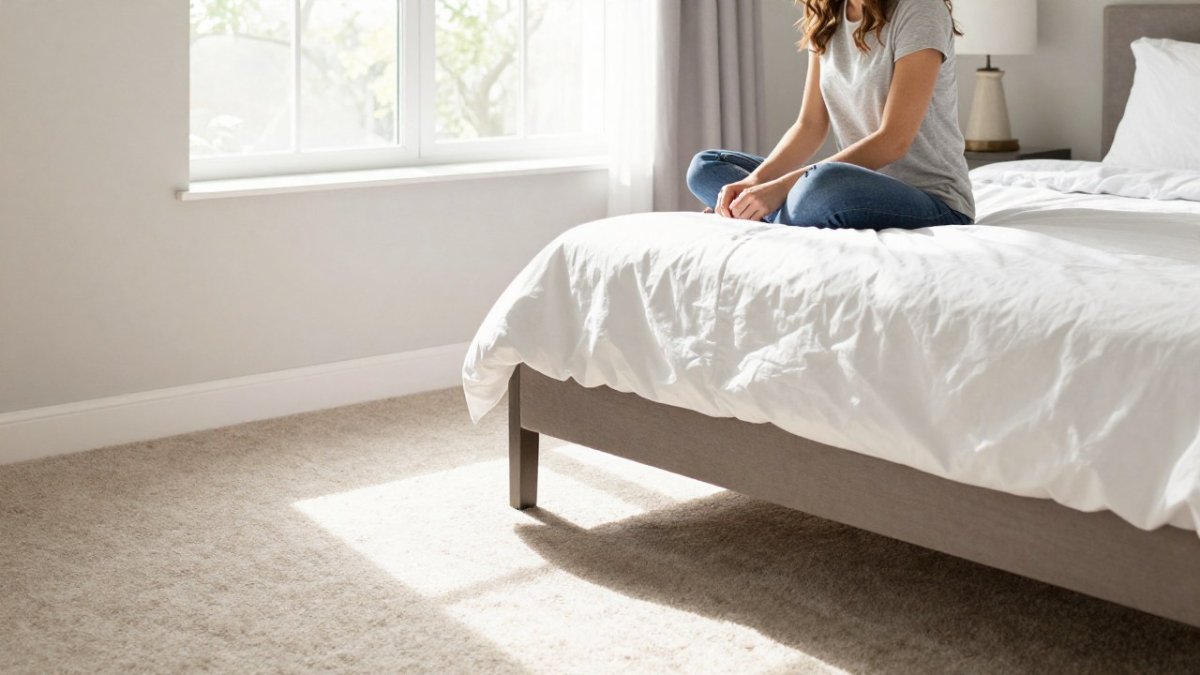
For most bedrooms, carpet is the more comfortable choice. It feels warm on bare feet, dampens noise, and costs less to install across a larger room. Many homeowners pair carpet in the bedroom with hardwood in shared living areas, which balances comfort where you sleep with durability where traffic is heavy.
A bright, comfortable bedroom with soft carpet underfoot beside a bed with white linens, morning light through the window.
Pros and Cons of Carpet vs Hardwood for Seniors
For older adults, the best floor is the one that reduces slips and falls. Carpet offers a softer surface that can cushion a fall, while hardwood can be slippery when wet and harder on joints. However, loose or worn carpet creates trip hazards, so the edges and seams need upkeep.
Hardwood is easier to keep free of dust and allergens, which can matter for people with respiratory concerns. For guidance on floors suited to aging households, read how to choose pet-friendly and easy-care flooring.
Carpet vs Hardwood Stairs: What to Consider
Stairs get the most wear, so the choice matters here. Carpet on stairs is quieter and grips better, which reduces slips. It also hides dirt better than hardwood, but it shows wear at the nosing where feet land. Hardwood stairs look polished and are durable, but they can be slippery and loud.
Before choosing, check the tread profile and whether the stairs have landings or turns, since both affect installation cost.
Choosing the Right Floor for Your Household and Next Step
Start with the room. Carpet suits bedrooms and quiet spaces, while hardwood suits entryways, kitchens, and high-traffic living areas. Factor in pets, children, allergies, and how long you plan to stay. Flooring America's guide to comparing upfront flooring cost against long-term value supports weighing both costs together.
When you are ready to move forward, professional flooring installation is worth considering for a clean, lasting result. Floor Coverings International of Myrtle Beach offers in-home consultations so you can see samples in your own lighting before you decide.
Ready to compare options in your own home? Get a Free Estimate from Floor Coverings International of Myrtle Beach and find the flooring that fits your room and your budget.
Frequently Asked Questions
Which costs more, carpet or hardwood flooring?
Carpet usually costs less upfront. Final pricing depends on the material grade, the subfloor, the square footage, and installation complexity. Hardwood can offset some of that difference over time because it can be refinished multiple times and often lasts far longer than carpet, which typically wears sooner than hardwood under heavy use. For current pricing and a quote tailored to your home, contact Floor Coverings International of Myrtle Beach.
Is carpet or hardwood better for bedrooms?
Carpet is often the more comfortable choice for bedrooms. It feels softer and warmer underfoot, absorbs sound, and is generally less expensive to install. Hardwood is durable and easier to keep free of dust and allergens, but it can feel cold and echo more. Many homeowners pick carpet for sleeping areas and hardwood for hallways and kitchens. The right choice depends on how much you value warmth and quiet versus ease of cleaning and long-term durability.
Is carpet or hardwood safer for seniors?
However, a smooth hardwood surface can be slippery when wet, so rugs with non-slip backing need attention. A professional consultation can help match the surface to your mobility needs.
Do carpet and hardwood work well on stairs?
Carpet is widely used on stairs because it gives better traction, softens footsteps, and muffles noise. Hardwood stairs look elegant and last for decades, but the treads can be slippery, especially with socks or when wet, so they often need a runner or non-slip treatment. Carpet on stairs needs regular vacuuming to avoid grit buildup and may show wear on the nosing sooner than hardwood. Consider traction, noise, and cleaning needs when choosing for stairways.